In a recent column, I explained how the still-forming Trump administration is already doing serious harm to America’s longstanding global intelligence partnerships. In particular, fears that the White House is too friendly to Moscow are causing close allies to curtail some of their espionage relationships with Washington—a development with grave implications for international security, particularly in the all-important realm of counterterrorism.
Now those concerns are causing problems much closer to home—in fact, inside the Beltway itself. Our Intelligence Community is so worried by the unprecedented problems of the Trump administration—not only do senior officials possess troubling ties to the Kremlin, there are nagging questions about basic competence regarding Team Trump—that it is beginning to withhold intelligence from a White House which our spies do not trust.
That the IC has ample grounds for concern is demonstrated by almost daily revelations of major problems inside the White House, a mere three weeks after the inauguration. The president has repeatedly gone out of his way to antagonize our spies, mocking them and demeaning their work, and Trump’s personal national security guru can’t seem to keep his story straight on vital issues.
That’s Mike Flynn, the retired Army three-star general who now heads the National Security Council. Widely disliked in Washington for his brash personality and preference for conspiracy-theorizing over intelligence facts, Flynn was fired as head of the Defense Intelligence Agency for managerial incompetence and poor judgment—flaws he has brought to the far more powerful and political NSC...
http://observer.com/2017/02/donald-trump-administration-mike-flynn-russian-embassy/
Showing posts with label intelligence. Show all posts
20170212
20170108
Commentary: Reading news in the age of Trump? Think like a spy.
President-elect Donald Trump is clearly antagonistic toward the mainstream media. That attitude is unlikely to change after Inauguration Day. His disdain for journalists and reluctance to release details about his finances and business ventures may force journalists to rely increasingly on anonymous sources, a strategy that reputable news organizations have long frowned upon.
So in the age of Trump, how should a reader approach coverage that relies primarily on anonymous sources?
Read the news like a spy.
By not naming a source, a journalist asks you to trust them. Did they talk to an intern or a policymaker? Every source has an agenda; if we as readers don't know the source we have a hard time parsing out and then evaluating that motivation. Remember the way the press covereddecisions that led to the 2003 Iraq War via articles based on unnamed sources, all with tall tales of Weapons of Mass Destruction?
Anonymous sources certainly have their place. During the Watergate scandal, Washington Postreporters Bob Woodward and Carl Bernstein used a contact named Deep Throat to verify details about U.S. President Richard Nixon’s involvement in the break-in of the Democratic National Committee’s headquarters, theft of top-secret documents and bugging of phones. Legitimate sources need to be protected from retaliation in return for informing the public, especially where national security whistle-blowing is concerned.
Many readers feel they have only two options: take the reporter’s word for it, or not. The result is a steady flow of insider stories that get blasted through aggregated media, which simply repeat others’ work. They then abandon the story as online roadkill for us to Tweet about. We tend to either label what we read as bogus, or scream at people who label what we believe as bogus.
The unique circumstances of Trump’s business background mean legitimate anonymous sources will likely have to play a significant role in reporting over the next four years. At the same time, the echo-like nature of the web, coupled with partisan outlets and equally partisan readers, opens the door to more unscrupulous or mistaken use of anonymous sources.
So how can readers exercise intelligent skepticism?
One way is to apply some of the same tests intelligence officers use to help them evaluate their own sources. Since an article’s unnamed sources are fully unknown to you as the reader, not every test applies, but thinking backwards from the information in front of you to who could be the source is a good start on forming a sense of how credible what you are being told might be...
http://www.reuters.com/article/us-media-trump-commentary-idUSKBN14O17D
So in the age of Trump, how should a reader approach coverage that relies primarily on anonymous sources?
Read the news like a spy.
By not naming a source, a journalist asks you to trust them. Did they talk to an intern or a policymaker? Every source has an agenda; if we as readers don't know the source we have a hard time parsing out and then evaluating that motivation. Remember the way the press covereddecisions that led to the 2003 Iraq War via articles based on unnamed sources, all with tall tales of Weapons of Mass Destruction?
Anonymous sources certainly have their place. During the Watergate scandal, Washington Postreporters Bob Woodward and Carl Bernstein used a contact named Deep Throat to verify details about U.S. President Richard Nixon’s involvement in the break-in of the Democratic National Committee’s headquarters, theft of top-secret documents and bugging of phones. Legitimate sources need to be protected from retaliation in return for informing the public, especially where national security whistle-blowing is concerned.
Many readers feel they have only two options: take the reporter’s word for it, or not. The result is a steady flow of insider stories that get blasted through aggregated media, which simply repeat others’ work. They then abandon the story as online roadkill for us to Tweet about. We tend to either label what we read as bogus, or scream at people who label what we believe as bogus.
The unique circumstances of Trump’s business background mean legitimate anonymous sources will likely have to play a significant role in reporting over the next four years. At the same time, the echo-like nature of the web, coupled with partisan outlets and equally partisan readers, opens the door to more unscrupulous or mistaken use of anonymous sources.
So how can readers exercise intelligent skepticism?
One way is to apply some of the same tests intelligence officers use to help them evaluate their own sources. Since an article’s unnamed sources are fully unknown to you as the reader, not every test applies, but thinking backwards from the information in front of you to who could be the source is a good start on forming a sense of how credible what you are being told might be...
http://www.reuters.com/article/us-media-trump-commentary-idUSKBN14O17D
20160928
20160830
20160717
Wiki: The Gehlen Organization
The Gehlen Organization or Gehlen Org was an intelligence agency established in June 1946 by U.S. occupation authorities in the United States Zone of Germany, and consisted of former Nazi members of the 12th Department of the German Army General Staff (Foreign Armies East, or FHO). It carries the name of Wehrmacht Major general Reinhard Gehlen, head of the Nazi German military intelligence in the Eastern Front during World War II.
Establishment
Reinhard Gehlen had all along been under the tutelage of US Army G-2 (intelligence), but he wished to establish and succeeded in establishing an association with the Central Intelligence Agency (CIA), in 1947. In alliance with the CIA, the military orientation of the organization turned increasingly toward political, economic and technical espionage against the Eastern bloc and the moniker "Pullach" became synonymous with secret service intrigues.[1]
The Org was for many years the only eyes and ears of the CIA on the ground in the Soviet Bloc nations during the Cold War. The CIA kept close tabs on the Gehlen group: the Org supplied the manpower while the CIA supplied the material needs for clandestine operations, including funding, cars and airplanes....
...The Gehlen Org employed hundreds of ex-Nazis.[8]
Establishment
Reinhard Gehlen had all along been under the tutelage of US Army G-2 (intelligence), but he wished to establish and succeeded in establishing an association with the Central Intelligence Agency (CIA), in 1947. In alliance with the CIA, the military orientation of the organization turned increasingly toward political, economic and technical espionage against the Eastern bloc and the moniker "Pullach" became synonymous with secret service intrigues.[1]
The Org was for many years the only eyes and ears of the CIA on the ground in the Soviet Bloc nations during the Cold War. The CIA kept close tabs on the Gehlen group: the Org supplied the manpower while the CIA supplied the material needs for clandestine operations, including funding, cars and airplanes....
...The Gehlen Org employed hundreds of ex-Nazis.[8]
Criticism[edit]
Once the Org emerged into the public eye, Gehlen and his group drew criticism of varying quality from both sides, the West and the East. The British in particular had a problem with Gehlen and segments of the English press made sure it became known. Beginning with an article on 17 March 1952, Sefton Delmer, senior correspondent for London's Daily Express, dragged Gehlen into the news. On 10 August 1954, Delmer set the tone by announcing that "Gehlen and his Nazis are coming". Delmer, incredibly, implied in his story that a continuation of nothing less than Hitler's aims was at hand through this "monstrous underground power in Germany".[9] In more recent days,[when?] after reviewing selected declassified CIA documents on the Gehlen Org, a Guardian article offered a new perspective on this attempt to fight the new tyranny with some of the agents of the previous one "... for all the moral compromises involved [in hiring former Nazis], it was a complete failure in intelligence terms. The Nazis were terrible spies".[10] The communist East as expected, castigated Gehlen's group as fanatical and virulent agents of revenge and of American imperialism, fitting the party's general line that the West was plotting a revival of Nazi power.[11]
There was also Alois Brunner in Syria, alleged to be an Org operative, who was responsible for the Drancy internment camp near Paris and for the death of 140,000 Jews.[12] According to Robert Wolfe, historian at the US National Archives, "US Army intelligence accepted Reinhard Gehlen's offer to furnish alleged expertise on the Red Army – and was bilked by the many mass murderers he hired".[10] It appears that this last quote conflates two issues, because the CIA Studies in Intelligence review article asserts that the Org was a capable collector of information on the Red Army but this does not rule out the possibility that U.S. Army intelligence may have been "bilked" on other issues.
End[edit]
On 1 April 1956, the Gehlen Org was formally established as the Bundesnachrichtendienst (or Federal Intelligence Agency) of the Federal Republic of Germany, which still exists. Reinhard Gehlen stepped down as president in 1968 after reaching retirement age...
Once the Org emerged into the public eye, Gehlen and his group drew criticism of varying quality from both sides, the West and the East. The British in particular had a problem with Gehlen and segments of the English press made sure it became known. Beginning with an article on 17 March 1952, Sefton Delmer, senior correspondent for London's Daily Express, dragged Gehlen into the news. On 10 August 1954, Delmer set the tone by announcing that "Gehlen and his Nazis are coming". Delmer, incredibly, implied in his story that a continuation of nothing less than Hitler's aims was at hand through this "monstrous underground power in Germany".[9] In more recent days,[when?] after reviewing selected declassified CIA documents on the Gehlen Org, a Guardian article offered a new perspective on this attempt to fight the new tyranny with some of the agents of the previous one "... for all the moral compromises involved [in hiring former Nazis], it was a complete failure in intelligence terms. The Nazis were terrible spies".[10] The communist East as expected, castigated Gehlen's group as fanatical and virulent agents of revenge and of American imperialism, fitting the party's general line that the West was plotting a revival of Nazi power.[11]
There was also Alois Brunner in Syria, alleged to be an Org operative, who was responsible for the Drancy internment camp near Paris and for the death of 140,000 Jews.[12] According to Robert Wolfe, historian at the US National Archives, "US Army intelligence accepted Reinhard Gehlen's offer to furnish alleged expertise on the Red Army – and was bilked by the many mass murderers he hired".[10] It appears that this last quote conflates two issues, because the CIA Studies in Intelligence review article asserts that the Org was a capable collector of information on the Red Army but this does not rule out the possibility that U.S. Army intelligence may have been "bilked" on other issues.
End[edit]
On 1 April 1956, the Gehlen Org was formally established as the Bundesnachrichtendienst (or Federal Intelligence Agency) of the Federal Republic of Germany, which still exists. Reinhard Gehlen stepped down as president in 1968 after reaching retirement age...
20160626
Former Shin Bet head ‘bursts myth’ on cyber hackers who attack Israel
In his first big speech since stepping down as head of the Shin Bet (Israel Security Agency) last month, Yoram Cohen on Tuesday said he wanted to “burst the myth of retribution,” explaining that Israel always eventually learns who to hold responsible for trying to cyber-hack it.
Conventionally, most government and private sector officials say that one of the puzzles of cyber warfare is identifying who initiated a cyber attack.
Cohen’s statements, made at Tel Aviv University’s International Cybersecurity Conference, indicated that the Shin Bet’s abilities to decipher who cyber-attacks Israel are more advanced than has been previously known.
He also gave the agency credit for blocking all major cyber attacks the country has faced during his tenure (May 2011 to May 2016).
The former Shin Bet director explained that a major challenge in the field is that one small oversight could help Israeli adversaries inflict substantial harm.
At the same time, he said that Israeli intelligence had been empowered, realizing that the same was true for cyber-attacking adversaries – meaning Israel has many opportunities to inflict substantial cyber attacks from their mistakes.
Cohen pointed to three main cyber threats: computer network attacks, computer exploitation attacks and social media influence attacks.
Splitting them up, he said that while the first two are well-understood, the public is less familiar with the last one.
He explained that terrorist and jihad groups have started to launch sophisticated social media campaigns to try to mislead and frame the way that a target-country’s general public views developing events – since so much of an average person’s understanding of current affairs now depends on social media.
Latching on to a similar idea, Maj.- Gen. Herzi (Herzl) Halevi, IDF chief of military intelligence, who also spoke at the conference, described the dilemma concerning confronting these campaigns on social media.
He said that one of the questions asked is whether Israel should “plant” ideas of its own on social media to influence its adversaries in the country’s favor...
http://www.jpost.com/Israel-News/Former-Shin-Bet-head-bursts-myth-on-cyber-hackers-who-attack-Israel-457355
Conventionally, most government and private sector officials say that one of the puzzles of cyber warfare is identifying who initiated a cyber attack.
Cohen’s statements, made at Tel Aviv University’s International Cybersecurity Conference, indicated that the Shin Bet’s abilities to decipher who cyber-attacks Israel are more advanced than has been previously known.
He also gave the agency credit for blocking all major cyber attacks the country has faced during his tenure (May 2011 to May 2016).
The former Shin Bet director explained that a major challenge in the field is that one small oversight could help Israeli adversaries inflict substantial harm.
At the same time, he said that Israeli intelligence had been empowered, realizing that the same was true for cyber-attacking adversaries – meaning Israel has many opportunities to inflict substantial cyber attacks from their mistakes.
Cohen pointed to three main cyber threats: computer network attacks, computer exploitation attacks and social media influence attacks.
Splitting them up, he said that while the first two are well-understood, the public is less familiar with the last one.
He explained that terrorist and jihad groups have started to launch sophisticated social media campaigns to try to mislead and frame the way that a target-country’s general public views developing events – since so much of an average person’s understanding of current affairs now depends on social media.
Latching on to a similar idea, Maj.- Gen. Herzi (Herzl) Halevi, IDF chief of military intelligence, who also spoke at the conference, described the dilemma concerning confronting these campaigns on social media.
He said that one of the questions asked is whether Israel should “plant” ideas of its own on social media to influence its adversaries in the country’s favor...
http://www.jpost.com/Israel-News/Former-Shin-Bet-head-bursts-myth-on-cyber-hackers-who-attack-Israel-457355
20160518
Wiki: Abdussattar Shaikh
Abdussattar Shaikh' (ar عبد الستار شيخ) was an asset of the FBI’s San Diego Field Office from May 14, 1994 to July 2003,[2] who was called "The FBI's Best Chance to Uncover September 11th Before it Happened" by the Joint Inquiry into Intelligence Community Activities before and after the Terrorist Attacks of September 11, 2001.[3]
In 2000, two of the hijackers in the September 11 attacks, Nawaf Alhazmi and Khalid Almihdhar, moved in with Shaikh in Lemon Grove, California.[4] However, Shaikh did not provide his FBI contact Steven Butler with any information about the two; Butler claims that the names Nawaf and Khalid were only mentioned in casual conversation as two students who had rented rooms from him, and that once Shaikh had cut a phone call short stating that "Khalid's in the room".
Butler later asked Shaikh for their surnames, but was not given them. He was not told they were pursuing flight training and that the students were non-political and have done nothing to arouse suspicion. The CIA had not provided names to the FBI which could have prevented 9-11.[5][unreliable source?]"They were nice, but not what you call extroverted people" Shaikh told The San Diego Union-Tribune after the attacks. Still, he told reporters he bonded with Alhazmi, helping him open a bank account and place a personal ad on the World Wide Web. "He told me that he wanted to marry a Mexican girl," Shaikh told the Los Angeles Times. "The problem was that he didn't know any Spanish. So I taught him a few Spanish phrases."
The FBI has aroused suspicion of its own for claiming that he was a retired professor of English at San Diego State University (SDSU)[6] and Vice President for International Projects at American Commonwealth University (ACU). However it turned out that SDSU had no records of ever staffing him, and ACU was merely a scam, a diploma mill, started by retired Air Force General William Lyon.[7]
Citizens Review Board on Police Practices[edit]
Shaikh sat on San Diego's Citizens Review Board on Police Practices (CRBPP) during the time frame of his co-operation with the FBI. Ethical questions arose about his qualifications for city employment, as active police informants are precluded from employment on police oversight committees for obvious reasons. Shaikh was later removed from the board.[8]
https://en.wikipedia.org/wiki/Abdussattar_Shaikh
The term ‘NGO’ is a misnomer

By Yves Engler
They’re called NGOs — non-governmental organizations — but the description is misleading at best, or an outright lie generated by intelligence agencies at worst.
In fact, almost all development NGOs receive most of their funding from government and in return follow government policies and priorities. While this was always true, it has become easier to see with Harper’s Conservative government, which lacks the cleverness and subtlety of the Liberals who at least funded some “oppositional” activity to allow NGOs a veneer of independence.
The example of the NGO called Alternatives illustrates these points well. This group, which has ties to the progressive community in Canada and Quebec, has done some useful work in Palestine and Latin America. But, at the end of 2009, the Canadian International Development Agency failed to renew about $2.4 million in funding the Montreal-based organization. After political pressure was brought to bear, Ottawa partly reversed course, giving Alternatives $800,000 over three years.
Alternatives’ campaign to force the Conservatives to renew at least some of its funding and CIDA’s response tell us a great deal about the ever more overt ties between international development NGOs and western military occupation. After the cuts were reported, the head of Alternatives, Michel Lambert, tried to win favour with Conservative decision makers by explicitly tying the group’s projects to Canadian military interventions. In an article in French for Le Journal Des Alternatives [1] in which he claimed Alternatives was “positive[ly] evaluated and audited” by CIDA, Lambert asked: “How come countries like Afghanistan or Haiti that are at the heart of Canadian [military] interventions [and where Alternatives operated] are no longer essential for the Canadian government?”
After CIDA renewed $800,000 in funding, Lambert claimed victory. But, the CIDA money was only for projects in Afghanistan, Iraq and Haiti — three countries under military occupation. (The agreement prohibited Alternatives from using the money to “engage” the public and it excluded programs in Palestine and Central America.) When western troops invaded, Alternatives was not active in any of these three countries, which raises the questions: Is Alternatives prepared to follow Canadian aid anywhere, even if it is designed to strengthen military occupation? What alternatives do even “leftwing” NGOs such as Alternatives have when they are dependent on government funding?...
https://ri-ir.org/2010/08/18/the-term-ngo-is-a-misnomer/
20160516
Seeking Robert Levinson, the C.I.A. Consultant Who Vanished
In early March, a small group of private investigators, including two former F.B.I. agents, gathered for a meal at Old Tbilisi Garden, a restaurant in Greenwich Village that specializes in Georgian food.
It was a somber occasion. Two months earlier, the United States and Iran had exchanged prisoners, including several Americans held in Tehran’s notorious Evin Prison. Another American, Robert A. Levinson, long missing in Iran and a friend of those present, was not part of the deal. Mr. Levinson, a former F.B.I. agent who became a private investigator, also had another life: as a consultant for the C.I.A.
In March 2007, Mr. Levinson, then 59, disappeared on Kish Island, in the Persian Gulf off the coast of Iran, while trying to recruit a fugitive American-born assassin as a C.I.A. source inside Iran. He was last seen alive in 2010 in a hostage video pleading for help and in photographs wearing a Guantánamo-style jumpsuit. The images did not disclose who was holding him. It is not known whether Mr. Levinson, who was eager to expand his role at the C.I.A. and who apparently decided on his own to go to Iran, is still alive.
The event at Old Tbilisi was held to observe the ninth anniversary of his disappearance. Former colleagues toasted him and traded stories. Mr. Levinson, like those present, had spent his career in a shadow land, one where spies, agents and private eyes persuade informants to spill secrets in exchange for money or a deal. It is a risky game that can pay off big or that can go very wrong, as Mr. Levinson’s trip to Iran did...
http://www.nytimes.com/2016/05/15/nyregion/seeking-robert-levinson-cia-consultant-who-vanished.html
It was a somber occasion. Two months earlier, the United States and Iran had exchanged prisoners, including several Americans held in Tehran’s notorious Evin Prison. Another American, Robert A. Levinson, long missing in Iran and a friend of those present, was not part of the deal. Mr. Levinson, a former F.B.I. agent who became a private investigator, also had another life: as a consultant for the C.I.A.
In March 2007, Mr. Levinson, then 59, disappeared on Kish Island, in the Persian Gulf off the coast of Iran, while trying to recruit a fugitive American-born assassin as a C.I.A. source inside Iran. He was last seen alive in 2010 in a hostage video pleading for help and in photographs wearing a Guantánamo-style jumpsuit. The images did not disclose who was holding him. It is not known whether Mr. Levinson, who was eager to expand his role at the C.I.A. and who apparently decided on his own to go to Iran, is still alive.
The event at Old Tbilisi was held to observe the ninth anniversary of his disappearance. Former colleagues toasted him and traded stories. Mr. Levinson, like those present, had spent his career in a shadow land, one where spies, agents and private eyes persuade informants to spill secrets in exchange for money or a deal. It is a risky game that can pay off big or that can go very wrong, as Mr. Levinson’s trip to Iran did...
http://www.nytimes.com/2016/05/15/nyregion/seeking-robert-levinson-cia-consultant-who-vanished.html
The NSA’s stunning 9/11 failure: How big-money contractors made us more vulnerable to attack
On September 12, 2001, Bill Binney snuck back into work at the NSA dressed like cleaning staff so he could try to help understand who had attacked the United States. A top NSA mathematician, Binney had rolled out a sophisticated metadata analysis system called ThinThread, only to have it canceled less than a month before 9/11. Top executives at the agency had decided a clunky program called Trailblazer, contracted out to the intelligence contractor giant SAIC, would be NSA’s future, not the cheaper, more effective and privacy-protective ThinThread.
While NSA Director General Michael Hayden had sent most NSA staffers home on 9/11 and the day after —hence Binney’s disguise — the contractors were hard at work. As Binney describes in “A Good American“ — a documentary about Binney due for wider release in September — some contractors working in his unit had gotten a warning. “While I was in there trying to look at the material on my computer, the president of the contracting group that I had working on ThinThread came over to me and said that he’d just been in a contractor meeting” with a former top SAIC official who moved back to NSA, supporting Trailblazer. The contractors, it turns out, were warned not to embarrass companies like SAIC, which (the implication is) had just failed to warn about the biggest attack on the United States since Pearl Harbor. “Do not embarrass large companies,” the former SAIC manager, according to Binney, said to the other contractor. “You do your part, you’ll get your share, there’s plenty for everybody.” Stay quiet about the failures that led to 9/11, and you’ll be financially rewarded.
It turns out there was plenty for SAIC and the NSA executives who had backed them to be embarrassed about. Binney and a bunch of close associates quit NSA when the Administration rolled out a new, illegal wiretap program called Stellar Wind in the weeks after 9/11. But another senior NSA official, Thomas Drake — an ally of Binney’s — decided to run the data already in NSA’s possession against ThinThread some months later to see whether ThinThread could reveal anything about the attack. Let’s “find out if there’s any information of the 9/11 attack that we should have known about but didn’t,” in Drake’s words.
There was...
http://www.salon.com/2016/05/12/the_nsas_stunning_911_failure_how_big_money_contractors_made_us_more_vulnerable_to_attack/
While NSA Director General Michael Hayden had sent most NSA staffers home on 9/11 and the day after —hence Binney’s disguise — the contractors were hard at work. As Binney describes in “A Good American“ — a documentary about Binney due for wider release in September — some contractors working in his unit had gotten a warning. “While I was in there trying to look at the material on my computer, the president of the contracting group that I had working on ThinThread came over to me and said that he’d just been in a contractor meeting” with a former top SAIC official who moved back to NSA, supporting Trailblazer. The contractors, it turns out, were warned not to embarrass companies like SAIC, which (the implication is) had just failed to warn about the biggest attack on the United States since Pearl Harbor. “Do not embarrass large companies,” the former SAIC manager, according to Binney, said to the other contractor. “You do your part, you’ll get your share, there’s plenty for everybody.” Stay quiet about the failures that led to 9/11, and you’ll be financially rewarded.
It turns out there was plenty for SAIC and the NSA executives who had backed them to be embarrassed about. Binney and a bunch of close associates quit NSA when the Administration rolled out a new, illegal wiretap program called Stellar Wind in the weeks after 9/11. But another senior NSA official, Thomas Drake — an ally of Binney’s — decided to run the data already in NSA’s possession against ThinThread some months later to see whether ThinThread could reveal anything about the attack. Let’s “find out if there’s any information of the 9/11 attack that we should have known about but didn’t,” in Drake’s words.
There was...
http://www.salon.com/2016/05/12/the_nsas_stunning_911_failure_how_big_money_contractors_made_us_more_vulnerable_to_attack/
20160502
HOW THE CIA WRITES HISTORY
LAST SUMMER I PAID a visit to Georgetown University’s Lauinger Library as part of my research on legendary CIA counterspy James Jesus Angleton. I went there to investigate Angleton’s famous mole hunt, one of the least flattering episodes of his eventful career. By the early 1960s, Angleton was convinced the KGB had managed to insert a penetration agent high in the ranks of the CIA.
In researching and writing a biography of Angleton, I constantly confront a conundrum: Was the man utterly brilliant? Or completely nuts?
Angleton is one of America’s archetypal spies. He was the model for Harlot in Harlot’s Ghost, Norman Mailer’s epic of the CIA, a brooding Cold War spirit hovering over a story of corrupted idealism. In Robert De Niro’s cinematic telling of the tale, The Good Shepherd, the Angletonian character was a promising product of the system who loses his way in the moral labyrinth of secret intelligence operations.
In real life, Jim Angleton was a formidable intellectual and canny bureaucrat who helped shape the ethos of the Central Intelligence Agency we have today. His doctrine of counterintelligence was widely influential, not only in the CIA but in the intelligence services of all the English-speaking countries. He pioneered pre-digital techniques of mass surveillance via an illicit mail-opening program called LINGUAL. He fed the intel to J. Edgar Hoover’s COINTELPRO operatives at the FBI who used it to harass, disrupt, and discredit leftist, antiwar, and civil rights groups from the 1950s to the 1970s. His close liaison with the Mossad in the 1950s and 1960s helped forge a wide-ranging U.S.-Israel strategic relationship that has been central to U.S. foreign policy ever since...
https://theintercept.com/2016/04/25/how-the-cia-writes-history/
In researching and writing a biography of Angleton, I constantly confront a conundrum: Was the man utterly brilliant? Or completely nuts?
Angleton is one of America’s archetypal spies. He was the model for Harlot in Harlot’s Ghost, Norman Mailer’s epic of the CIA, a brooding Cold War spirit hovering over a story of corrupted idealism. In Robert De Niro’s cinematic telling of the tale, The Good Shepherd, the Angletonian character was a promising product of the system who loses his way in the moral labyrinth of secret intelligence operations.
In real life, Jim Angleton was a formidable intellectual and canny bureaucrat who helped shape the ethos of the Central Intelligence Agency we have today. His doctrine of counterintelligence was widely influential, not only in the CIA but in the intelligence services of all the English-speaking countries. He pioneered pre-digital techniques of mass surveillance via an illicit mail-opening program called LINGUAL. He fed the intel to J. Edgar Hoover’s COINTELPRO operatives at the FBI who used it to harass, disrupt, and discredit leftist, antiwar, and civil rights groups from the 1950s to the 1970s. His close liaison with the Mossad in the 1950s and 1960s helped forge a wide-ranging U.S.-Israel strategic relationship that has been central to U.S. foreign policy ever since...
https://theintercept.com/2016/04/25/how-the-cia-writes-history/
20160330
The phones of US Director of National Intelligence James Clapper
One of the key players during the Snowden affair was Director of National Intelligence James Clapper. He is responsible for coordinating all 16 American intelligence agencies, a role which is reflected by the number and the types of telephone equipment in his office.
Clapper has six phones, more than for example the director of the NSA, or the Defense Secretary. Here we will take a close look at these telecommunication devices used by the US Director of National Intelligence.
The office of Director of National Intelligence (DNI) was created in 2004, after the 9/11 Commission Report recommended a stronger and separate leadership for the US intelligence community. Before, it was the director of the CIA who acted as Director of Central Intelligence (DCI) in order to coordinate the various intelligence agencies...
20160219
Wiki: Able Danger
Able Danger was a classified military planning effort led by the U.S. Special Operations Command (SOCOM) and the Defense Intelligence Agency (DIA). It was created as a result of a directive from the Joint Chiefs of Staff in early October 1999 by Chairman of the Joint Chiefs of Staff Hugh Shelton, to develop an information operations campaign plan against transnational terrorism.
According to statements by Lt. Col. Anthony Shaffer and those of four others, Able Danger had identified 2 of 3 Al Qaeda cells active in the 9/11 attacks; the 'Brooklyn cell' linked to "Blind Sheik" Omar Abdel-Rahman, including September 11 attacks leader Mohamed Atta, and three of the 9/11 plot's other 19 hijackers.
In December 2006, a sixteen-month investigation by the US Senate Intelligence Committee concluded "Able Danger did not identify Mohamed Atta or any other 9/11 hijacker at any time prior to September 11, 2001," and dismissed other assertions that have fueled 9/11 conspiracy theories. The Senate Judiciary Committee first attempted to investigate the matter for the Senate in September, 2005. The Pentagon "ordered five key witnesses not to testify", according to Senate Judiciary Committee Chairman Arlen Specter. "That looks to me as if it may be obstruction of the committee's activities," Specter, R-Pennsylvania, said at the start of his committee's hearing into the unit.[1]
Attorney Mark Zaid, representing Lt. Colonel Anthony Shaffer and the other four Able Danger employees at the Senate Judiciary Committee hearing in September 2005, pointed out to the Committee that his clients had been forbidden by the Pentagon to testify to the Committee. He also discussed the Defense Intelligence Agency's decision to suspend Lt. Colonel Shaffer's security clearance shortly after it became known that he had provided information to the 9/11 Commission on Able Danger. "Based on years of experience I can say categorically that the basis for the revocation was questionable at best."[2] [3]
An investigation by the Defense Department Inspector General's office (IG) in September 2006 concluded that "the evidence did not support assertions that Able Danger identified the September 11, 2001, terrorists nearly a year before the attack, that Able Danger team members were prohibited from sharing information with law enforcement authorities, or that DoD officials acted against LTC Shaffer for his disclosures regarding Able Danger." However, some of the people questioned by the IG claimed their statements to the IG were distorted by investigators in the final IG's report, and the report omitted essential information that they had provided. Lt. Col Tony Shaffer has claimed that the DOD retaliated against him for speaking out publicly about the IG report's distortions.[4]
The Senate panel of investigators said there was no evidence DoD lawyers stopped analysts from sharing findings with the FBI before the attacks. Analysts had created charts that included pictures of then-known Al Qaeda operatives, but none including Atta. A follow-up chart made after the attacks did show Atta. The Senate Committee said its findings were consistent with those of the DoD inspector general, released in September 2006. [5] [6]..
https://en.wikipedia.org/wiki/Able_Danger
According to statements by Lt. Col. Anthony Shaffer and those of four others, Able Danger had identified 2 of 3 Al Qaeda cells active in the 9/11 attacks; the 'Brooklyn cell' linked to "Blind Sheik" Omar Abdel-Rahman, including September 11 attacks leader Mohamed Atta, and three of the 9/11 plot's other 19 hijackers.
In December 2006, a sixteen-month investigation by the US Senate Intelligence Committee concluded "Able Danger did not identify Mohamed Atta or any other 9/11 hijacker at any time prior to September 11, 2001," and dismissed other assertions that have fueled 9/11 conspiracy theories. The Senate Judiciary Committee first attempted to investigate the matter for the Senate in September, 2005. The Pentagon "ordered five key witnesses not to testify", according to Senate Judiciary Committee Chairman Arlen Specter. "That looks to me as if it may be obstruction of the committee's activities," Specter, R-Pennsylvania, said at the start of his committee's hearing into the unit.[1]
Attorney Mark Zaid, representing Lt. Colonel Anthony Shaffer and the other four Able Danger employees at the Senate Judiciary Committee hearing in September 2005, pointed out to the Committee that his clients had been forbidden by the Pentagon to testify to the Committee. He also discussed the Defense Intelligence Agency's decision to suspend Lt. Colonel Shaffer's security clearance shortly after it became known that he had provided information to the 9/11 Commission on Able Danger. "Based on years of experience I can say categorically that the basis for the revocation was questionable at best."[2] [3]
An investigation by the Defense Department Inspector General's office (IG) in September 2006 concluded that "the evidence did not support assertions that Able Danger identified the September 11, 2001, terrorists nearly a year before the attack, that Able Danger team members were prohibited from sharing information with law enforcement authorities, or that DoD officials acted against LTC Shaffer for his disclosures regarding Able Danger." However, some of the people questioned by the IG claimed their statements to the IG were distorted by investigators in the final IG's report, and the report omitted essential information that they had provided. Lt. Col Tony Shaffer has claimed that the DOD retaliated against him for speaking out publicly about the IG report's distortions.[4]
The Senate panel of investigators said there was no evidence DoD lawyers stopped analysts from sharing findings with the FBI before the attacks. Analysts had created charts that included pictures of then-known Al Qaeda operatives, but none including Atta. A follow-up chart made after the attacks did show Atta. The Senate Committee said its findings were consistent with those of the DoD inspector general, released in September 2006. [5] [6]..
https://en.wikipedia.org/wiki/Able_Danger
20160126
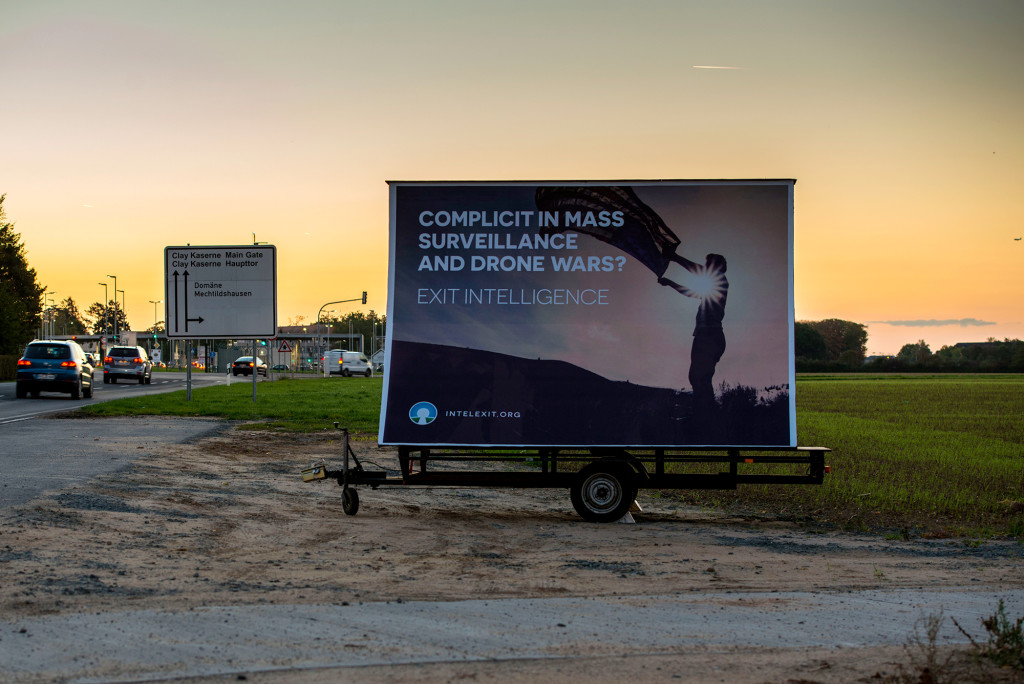
INTELEXIT
Intelexit is an initiative that motivates and supports people working in the secret services to quit their jobs, mostly for ethical reasons.
WHY?
Many employees of the secret services experience moral distress when they witness or inadvertently become part of crimes, lies and abuses. These people typically have no support networks to lean on and cannot talk about their concerns with anyone. They might think about leaving their job but are unsure how to go about it or where to seek advice, without jeopardizing their career or relationships.
WHAT INTELEXIT DOES
Intelexit is first and foremost a campaign to show the human side of surveillance. We reach out to spies through public communications campaigns and also offer more individual consultation.
WHAT WE CAN OFFER
A caring human at the end of the encrypted channel of communication to us.
An attempt to support whoever contacts us by matching them with the relevant experts on legal, psychological and whistleblowing matters related to a potential exit.
Publishing information as we find it to help people who have questions or need help deciding.
WHAT WE CANNOT OFFER
A platform or assistance with whistlebblowing or leaks (although we can recommend who can help with that)
A retreat house in the mountains where spies can recuperate.
Guaranteed global help for anyone who contacts us.
GETTING IN TOUCH
For a first assessment of potential support measures, we rely on enough information about individual needs and context. Of course it is crucial that anyone from the intelligence community reaching out to us makes sure to use secure communication if they don't want their departments to know about it. If you contact us via the Tor hidden service, please provide a public PGP key or a jabber channel we can use to get back to you...
https://www.intelexit.org
A platform or assistance with whistlebblowing or leaks (although we can recommend who can help with that)
A retreat house in the mountains where spies can recuperate.
Guaranteed global help for anyone who contacts us.
GETTING IN TOUCH
For a first assessment of potential support measures, we rely on enough information about individual needs and context. Of course it is crucial that anyone from the intelligence community reaching out to us makes sure to use secure communication if they don't want their departments to know about it. If you contact us via the Tor hidden service, please provide a public PGP key or a jabber channel we can use to get back to you...
https://www.intelexit.org
20150129
How the CIA made Google - Part I
This exclusive is being released for free in the public interest, and was enabled by crowdfunding. I’d like to thank my amazing community of patrons for their support, which gave me the opportunity to work on this in-depth investigation. Please support independent, investigative journalism for the global commons.
In the wake of the Charlie Hebdo attacks in Paris, western governments are moving fast to legitimize expanded powers of mass surveillance and controls on the internet, all in the name of fighting terrorism.
US and European politicians have called to protect NSA-style snooping, and to advance the capacity to intrude on internet privacy by outlawing encryption. One idea is to establish a telecoms partnership that would unilaterally delete content deemed to “fuel hatred and violence” in situations considered “appropriate.” Heated discussions are going on at government and parliamentary level to explore cracking down on lawyer-client confidentiality.
What any of this would have done to prevent the Charlie Hebdo attacks remains a mystery, especially given that we already know the terrorists were on the radar of French intelligence for up to a decade.
There is little new in this story. The 9/11 atrocity was the first of many terrorist attacks, each succeeded by the dramatic extension of draconian state powers at the expense of civil liberties, backed up with the projection of military force in regions identified as hotspots harbouring terrorists. Yet there is little indication that this tried and tested formula has done anything to reduce the danger. If anything, we appear to be locked into a deepening cycle of violence with no clear end in sight.
As our governments push to increase their powers, INSURGE INTELLIGENCE can now reveal the vast extent to which the US intelligence community is implicated in nurturing the web platforms we know today, for the precise purpose of utilizing the technology as a mechanism to fight global ‘information war’ — a war to legitimize the power of the few over the rest of us. The lynchpin of this story is the corporation that in many ways defines the 21st century with its unobtrusive omnipresence: Google...
https://medium.com/@NafeezAhmed/how-the-cia-made-google-e836451a959e
In the wake of the Charlie Hebdo attacks in Paris, western governments are moving fast to legitimize expanded powers of mass surveillance and controls on the internet, all in the name of fighting terrorism.
US and European politicians have called to protect NSA-style snooping, and to advance the capacity to intrude on internet privacy by outlawing encryption. One idea is to establish a telecoms partnership that would unilaterally delete content deemed to “fuel hatred and violence” in situations considered “appropriate.” Heated discussions are going on at government and parliamentary level to explore cracking down on lawyer-client confidentiality.
What any of this would have done to prevent the Charlie Hebdo attacks remains a mystery, especially given that we already know the terrorists were on the radar of French intelligence for up to a decade.
There is little new in this story. The 9/11 atrocity was the first of many terrorist attacks, each succeeded by the dramatic extension of draconian state powers at the expense of civil liberties, backed up with the projection of military force in regions identified as hotspots harbouring terrorists. Yet there is little indication that this tried and tested formula has done anything to reduce the danger. If anything, we appear to be locked into a deepening cycle of violence with no clear end in sight.
As our governments push to increase their powers, INSURGE INTELLIGENCE can now reveal the vast extent to which the US intelligence community is implicated in nurturing the web platforms we know today, for the precise purpose of utilizing the technology as a mechanism to fight global ‘information war’ — a war to legitimize the power of the few over the rest of us. The lynchpin of this story is the corporation that in many ways defines the 21st century with its unobtrusive omnipresence: Google...
https://medium.com/@NafeezAhmed/how-the-cia-made-google-e836451a959e
20140419
Pox Americana
When fusion centers and their allied federal partners are pinpointed on these United States, it looks less like "We're here to help you" and more like a military occupation.
Dozens of documents and databases were scrubbed to elicit the actual location of these nefarious centers. You could say these GPS positions are a "fusion" of many sources!
GPS Points of Interest files for fusion centers and their partners can be downloaded below...:
http://futuretools.info/Americana.html
20131122
How To Spot A Spook
This article first appeared in the November 1974 issue of Washington Monthly
Both the Soviet and American intelligence establishments seem to share the obsession that the other side is always trying to bug them. Since the other side is, in fact, usually trying, our technicians and their technicians are constantly sweeping military installations and embassies to make sure no enemy, real or imagined, has succeeded. One night about ten years ago, a State Department security officer, prowling through the American embassy in Santiago, Chile, in search of Communist microphones, found a listening device carefully hidden in the office of a senior “political officer.” The security man, along with everyone else in the embassy, knew that this particular “political officer” was actually the Central Intelligence Agency’s “Station Chief,” or principal operative in Chile. Bugging his office would have indeed been a major coup for the opposition. Triumphantly. the security man ripped the microphone out of the wall – only to discover later that it had been installed hy the CIA station chief himself.
The reason the CIA office was located in the embassy – as it is in most of the other countries in the world – is that by presidential order the State Department is responsible for hiding and housing the CIA. Like the intelligence services of most other countries, the CIA has been unwilling to set up foreign offices under its own name. So American embassies – and, less frequently. military bases – provide the needed cover. State confers respectability on the Agency’s operatives, dressing them up with the same titles and calling cards that give legitimate diplomats entree into foreign government circles. Protected by diplomatic immunity, the operatives recruit local officials as CIA agents to supply secret intelligence and, especially in the Third World, to help in the Agency’s manipulation of a country’s internal affairs.
The CIA moves its men off the diplomatic lists only in Germany, Japan, and other countries where large numbers of American soldiers are stationed. In those countries, the CIA’s command post is still in the U.S. Embassy, but most of the CIA personnel are under military cover. With nearly 500,000 U.S. troops scattered around the world, the CIA “units” buried among them do not attract undue attention...
http://cryptocomb.org/?p=101
Both the Soviet and American intelligence establishments seem to share the obsession that the other side is always trying to bug them. Since the other side is, in fact, usually trying, our technicians and their technicians are constantly sweeping military installations and embassies to make sure no enemy, real or imagined, has succeeded. One night about ten years ago, a State Department security officer, prowling through the American embassy in Santiago, Chile, in search of Communist microphones, found a listening device carefully hidden in the office of a senior “political officer.” The security man, along with everyone else in the embassy, knew that this particular “political officer” was actually the Central Intelligence Agency’s “Station Chief,” or principal operative in Chile. Bugging his office would have indeed been a major coup for the opposition. Triumphantly. the security man ripped the microphone out of the wall – only to discover later that it had been installed hy the CIA station chief himself.
The reason the CIA office was located in the embassy – as it is in most of the other countries in the world – is that by presidential order the State Department is responsible for hiding and housing the CIA. Like the intelligence services of most other countries, the CIA has been unwilling to set up foreign offices under its own name. So American embassies – and, less frequently. military bases – provide the needed cover. State confers respectability on the Agency’s operatives, dressing them up with the same titles and calling cards that give legitimate diplomats entree into foreign government circles. Protected by diplomatic immunity, the operatives recruit local officials as CIA agents to supply secret intelligence and, especially in the Third World, to help in the Agency’s manipulation of a country’s internal affairs.
The CIA moves its men off the diplomatic lists only in Germany, Japan, and other countries where large numbers of American soldiers are stationed. In those countries, the CIA’s command post is still in the U.S. Embassy, but most of the CIA personnel are under military cover. With nearly 500,000 U.S. troops scattered around the world, the CIA “units” buried among them do not attract undue attention...
http://cryptocomb.org/?p=101
20130819
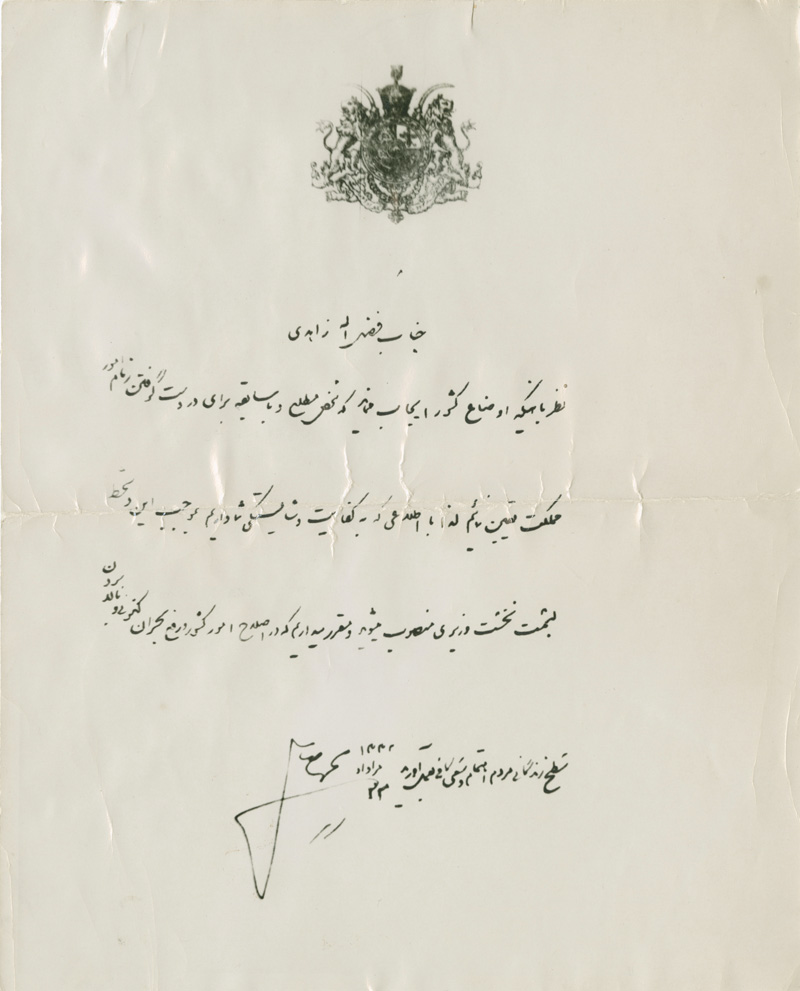
CIA Confirms Role in 1953 Iran Coup
Documents Provide New Details on Mosaddeq Overthrow and Its Aftermath...
20130706
WikiSpooks
The purpose of WikiSpooks is to build a repository of documents about deep political structures and events, together with development of the information they contain through user contributed articles, additions, edits and discussion. Emphasis is on the period from about 150 years ago to the present, although analysis of events in earlier times, by way of illustration and understanding of how deep politics operates, is encouraged - a classic example would be the Gunpowder Plot of 1605 in England (see below)...
https://wikispooks.com/wiki/Main_Page
20130702
Clapper: I gave 'erroneous' answer because I forgot about Patriot Act
The most senior US intelligence official told a Senate oversight panel that he “simply didn’t think” of the National Security Agency’s efforts to collect the phone records of millions of Americans when he testified in March that it did “not wittingly” snoop on their communications.
James Clapper, the director of national intelligence, made the comments in a letter to the Senate intelligence committee, released in full for the first time on Tuesday.
Portions of the letter, in which Clapper apologised for giving “clearly erroneous” testimony at a March hearing of the committee, were first reported by the Washington Post on Monday. Clapper had previously said that his answer to the committee was the “least untruthful” one he could publicly provide...
http://www.guardian.co.uk/world/2013/jul/02/james-clapper-senate-erroneous
Subscribe to:
Posts (Atom)