20160823
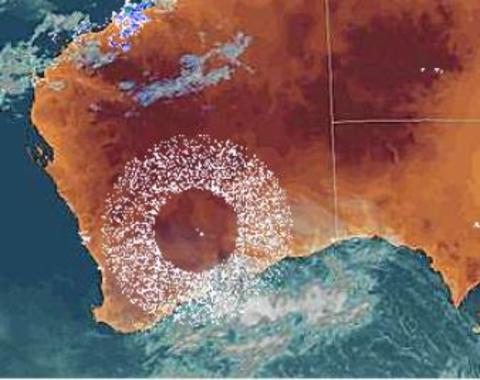
US Air Force wants to plasma bomb the sky using tiny satellites
Since the early days of radio, we have known that signals that cannot be picked up by day may be heard clearly at night from hundreds of kilometres away.
This is down to changes in the ionosphere, a layer of charged particles in the atmosphere that starts around 60 kilometres up (for more on this mysterious layer see “No-fly zone: Exploring the uncharted layers of our atmosphere“). The curvature of Earth stops most ground-based radio signals travelling more than 70 kilometres without a boost. But by bouncing between the ionosphere and the ground they can zigzag for much greater distances. At night the ionosphere is denser and more reflective.
It’s not the first time we’ve tried to improve radio communication by tinkering with the ionosphere. HAARP, the High Frequency Active Auroral Research Program in Alaska, stimulates the ionosphere with radiation from ground-based antennas to produce radio-reflecting plasma.
Now the USAF wants to do this more efficiently, with tiny satellites – such as CubeSats – carrying large volumes of ionised gas directly into the ionosphere.
There are at least two major challenges. One is building a plasma generator small enough to fit on a CubeSat. Then there’s the problem of controlling how the plasma disperses once released...
https://www.newscientist.com/article/mg23130871-000-us-air-force-wants-to-plasma-bomb-the-sky-using-tiny-satellites/
20120510
DARPA Space Enabled Effects for Military Engagements (SeeMe) - YouTube
20120407
NRO Launches Top Secret Payload Into Orbit | Top Secret Writers
20111225
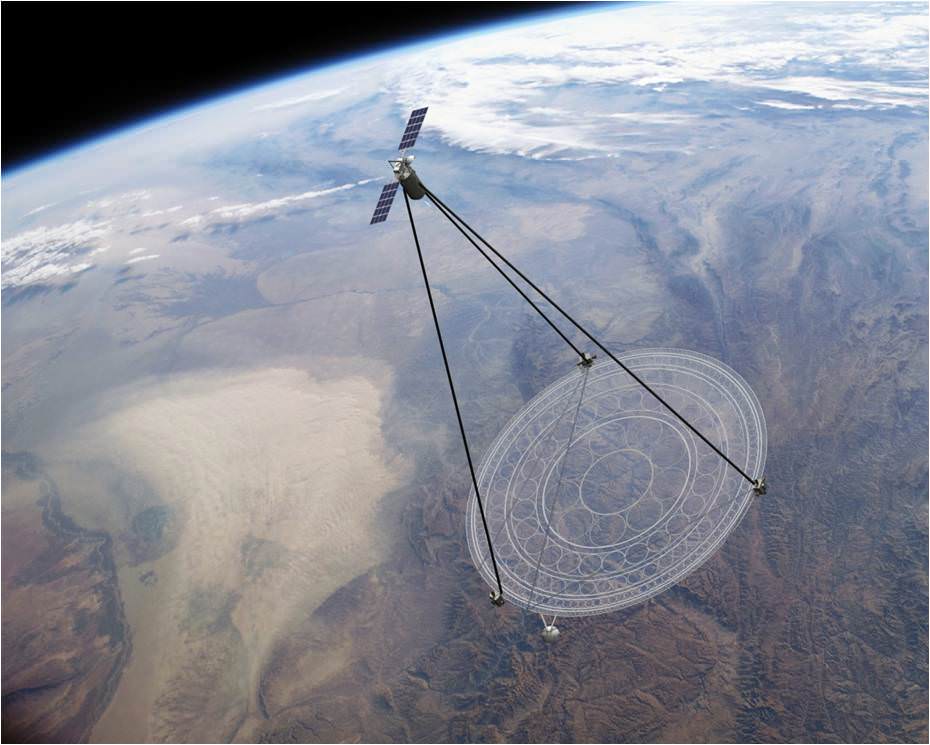
DARPA’s New Spy Satellite Could Provide Real-Time Video From Anywhere on Earth
“It sees you when you’re sleeping and knows when you’re awake” could be the theme song for a new spy satellite being developed by DARPA. The Defense Advanced Research Projects Agency’s latest proof-of-concept project is called the Membrane Optical Imager for Real-Time Exploitation (MOIRE), and would provide real-time images and video of any place on Earth at any time — a capability that, so far, only exists in the realm of movies and science fiction. The details of this huge eye-in-the-sky look like something right out of science fiction, as well, and it would be interesting to determine if it could have applications for astronomy as well.
20111116
Why Is China Building These Gigantic Structures In the Middle of the Desert?
This is crazy. New photos have appeared in Google Maps showing unidentified titanic structures in the middle of the Chinese desert. The first one is an intricate network of what appears to be huge metallic stripes. Is this a military experiment?
They seem to be wide lines drawn with some white material. Or maybe the dust have been dug by machinery.
It’s located in Dunhuang, Jiuquan, Gansu, north of the Shule River, which crosses the Tibetan Plateau to the west into the Kumtag Desert. It covers an area approximately one mile long by more than 3,000 feet wide.
20111101
Chinese Military Suspected in Hacker Attacks on U.S. Satellites
Oct. 27 (Bloomberg) -- Computer hackers, possibly from the Chinese military, interfered with two U.S. government satellites four times in 2007 and 2008 through a ground station in Norway, according to a congressional commission.
The intrusions on the satellites, used for earth climate and terrain observation, underscore the potential danger posed by hackers, according to excerpts from the final draft of the annual report by the U.S.-China Economic and Security Review Commission. The report is scheduled to be released next month.
“Such interference poses numerous potential threats, particularly if achieved against satellites with more sensitive functions,” according to the draft. “Access to a satellite‘s controls could allow an attacker to damage or destroy the satellite. An attacker could also deny or degrade as well as forge or otherwise manipulate the satellite’s transmission.”