Showing posts with label Germany. Show all posts

20170129

Wiki: Frederick Trump

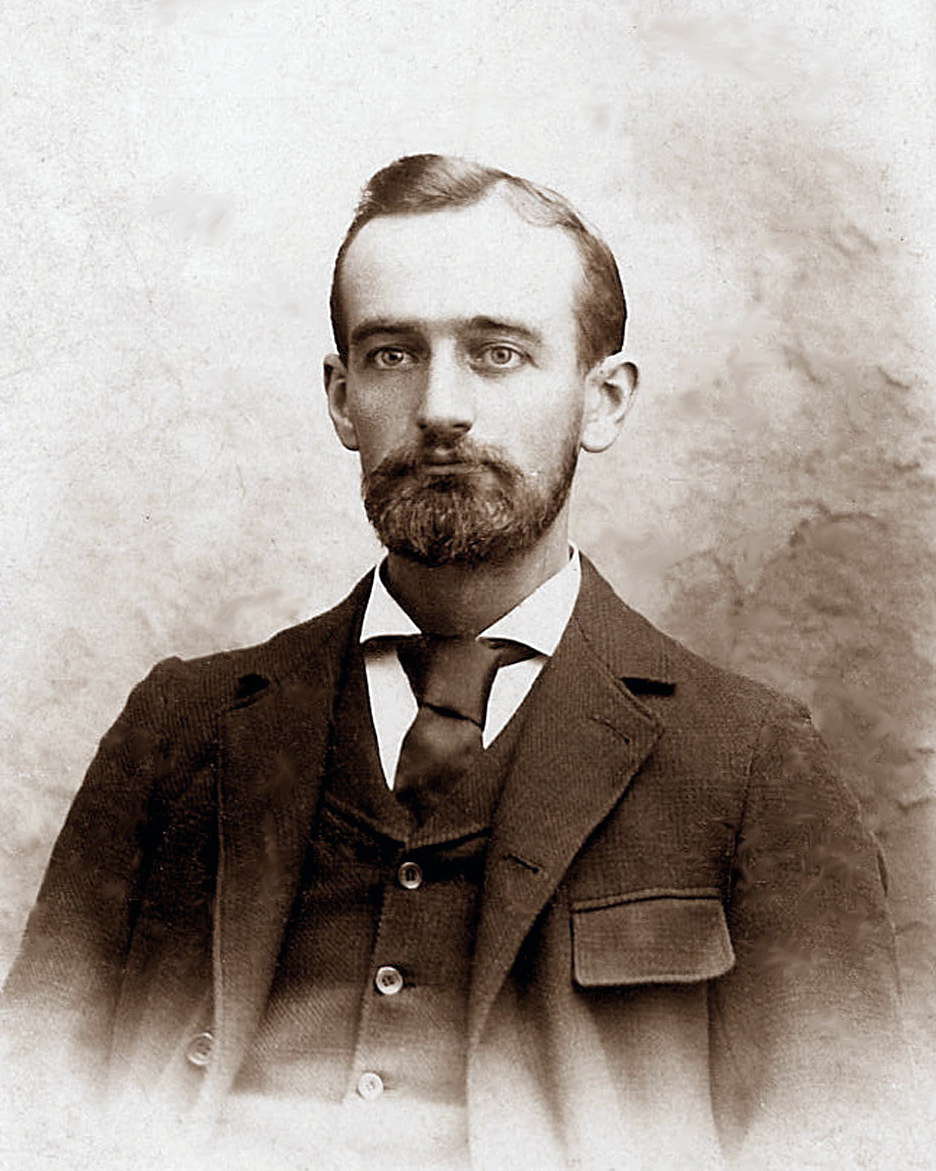
Frederick Trump (born Friedrich Trump; March 14, 1869 – May 27, 1918) was a German American businessman. Born in Kallstadt, in the Kingdom of Bavaria (now in Rhineland-Palatinate, Germany), he emigrated to the United States at the age of 16 and started working as a barber. Several years later in 1891, he moved to the Northwest. He made his fortune operating boom-town restaurants and boarding houses in Seattle and a mining town to the north, and in the Klondike Gold Rush.[1][2] He later returned to Germany and married. When authorities found that he had emigrated when young to avoid fulfilling his military service, he lost his Bavarian citizenship; he and his family returned to the United States...

Friedrich Trump was born in Kallstadt, Palatinate, then part of the Kingdom of Bavaria, to Christian Johannes Trump and Katharina Kober.[3][4]:480 The Trump family were Lutherans, as were most residents in the town,[5] although Bavaria was majority Catholic....

In 1885, at age 16, Trump emigrated via Bremen, Germany, to the United States aboard the steamship Eider, departing on October 7[4]:32 and arriving at the Castle Garden Emigrant Landing Depot in New York City on October 19. U.S. immigration records list his name as "Friedrich Trumpf", last place of residence as "Kallstadt", country of birth as "Germany", and his occupation as "farmer"...

In 1891, Trump moved to Seattle, in the newly admitted U.S. state of Washington. With his life savings of several hundred dollars, he bought the Poodle Dog, which he renamed the Dairy Restaurant, and supplied it with new tables, chairs, and a range.[2] Located at 208 Washington Street, the Dairy Restaurant was in the middle of Seattle’s Red Light District; Washington Street was nicknamed "the Line" and included an assortment of saloons, casinos, and brothels. Blair, the biographer, called it "a hotbed of sex, booze, and money, [it] was the indisputable center of the action in Seattle."[4]:41 The restaurant served food and liquor and was advertised to include "Rooms for Ladies", a common euphemism for prostitution...

Blair said that when Trump left for the Yukon, he had no plans to do actual mining.[4]:81 He likely travelled the White Pass route,[4]:83which included the notorious “Dead Horse trail,” so named because drivers whipped animals of transport until they literally dropped dead on the trail and were left to decompose. In the spring of 1898, Trump and another miner named Ernest Levin opened a tent restaurant along the trail. Blair wrote that "a frequent dish was fresh-slaughtered, quick-frozen horse."...

In May 1898, Trump and Levin moved to Bennett, British Columbia, a town known for prospectors building boats in order to travel to Dawson. In Bennett, Trump and Levin opened the Arctic Restaurant and Hotel, which offered fine dining and lodging in a sea of tents.[4]:85[10] The Arctic was also originally housed in a tent, but demand for the hotel and restaurant grew until it occupied a two-story building.[4][10] When describing the Arctic in a letter to the Yukon Sun newspaper, [a journalist?] wrote:

"For single men the Arctic has excellent accommodations as well as the best restaurant in Bennett, but I would not advise respectable women to go there to sleep as they are liable to hear that which would be repugnant to their feelings – and uttered, too, by the depraved of their own sex."[4]

The Arctic House was one of the largest and most extravagant restaurants in that region of the Klondike, offering fresh fruit and ptarmigan in addition to the staple of horsemeat.[10] The Arctic was open 24 hours a day and advertised "Rooms for ladies," which included beds and scales for measuring gold dust. The local Canadian Mounties were known to tolerate vice so long as it was conducted discreetly.[4]:86...

In May 1904, when Trump applied in New York for a U.S. passport to travel with his wife and his daughter, he listed his profession as "hotelkeeper".[15] In Germany, Trump deposited into a bank his life’s savings of 80,000 marks, equivalent to $505,248 in 2016.[4]:96...

Soon after the family returned, Bavarian authorities determined that Trump had emigrated from Germany to avoid his military-service obligations, and he was classified as a draft dodger.[4]:98 On December 24, 1904 the Department of Interior announced an investigation to expel Trump from the country....

https://en.wikipedia.org/wiki/Frederick_Trump

20160519

Developer of anonymous Tor software dodges FBI, leaves US


In its mission to hunt criminals, the FBI has been keen to hack Tor, the Internet browser that hides your true location.

The FBI's attempts to break into Tor are starting to manifest in strange ways.

FBI agents are currently trying to subpoena one of Tor's core software developers to testify in a criminal hacking investigation, CNNMoney has learned.

But the developer, who goes by the name Isis Agora Lovecruft, fears that federal agents will coerce her to undermine the Tor system -- and expose Tor users around the world to potential spying.

That's why, when FBI agents approached her and her family over Thanksgiving break last year, she immediately packed her suitcase and left the United States for Germany.

"I was worried they'd ask me to do something that hurts innocent people -- and prevent me from telling people it's happening," she said in an exclusive interview with CNNMoney.

The FBI declined to comment on the matter, citing a policy to neither confirm nor deny the existence of ongoing investigations.

However, according to an FBI agent familiar with the case, FBI agents in Atlanta and Los Angeles are seeking Lovecruft's help to investigate a hacking case in which she, in their eyes, is "connected."

The Electronic Frontier Foundation, which advocates for Internet freedom, has now taken up her cause...

http://money.cnn.com/2016/05/17/technology/tor-developer-fbi/index.html

20151230

Saudi Arabia is playing an increasingly destabilising role in the Middle East, German intelligence warns

German intelligence has warned that Saudi Arabia is playing an increasingly destabilising role in the Middle East.

The country's foreign intelligence agency, known as the BND, released a memo to select journalists warning of the negative effects the game of thrones being played within Saudi Arabia's royal family could cause.

"The cautious diplomatic stance of the older leading members of the royal family is being replaced by an impulsive policy of intervention," said the memo, seen by the New York TImes.

The one and a half page memo focuses on the role of Prince Mohammad bin Salman, the 30-year-old son of King Salman who was recently appointed deputy crown prince and defence minister.

“The concentration of economic and foreign policy power on Mohammed bin Salman contains the latent danger that, in an attempt to establish himself in the royal succession while his father is still alive, he could overreach with expensive measures or reforms that would unsettle other members of the royal family and the population," the memo observes.

"That could overstrain the relations to friendly and above all to allied states in the region.”

Germany's Foreign Ministry in Berlin has distanced itself from the memo, saying the German Embassy in Riyadh, Saudi Arabia, had issued a statement to say "the BND statement reported by media is not the position of the federal government..."

20151110

The CIA and Nazi War Criminals

Washington D.C., February 4, 2005 - Today the National Security Archive posted the CIA's secret documentary history of the U.S government's relationship with General Reinhard Gehlen, the German army's intelligence chief for the Eastern Front during World War II. At the end of the war, Gehlen established a close relationship with the U.S. and successfully maintained his intelligence network (it ultimately became the West German BND) even though he employed numerous former Nazis and known war criminals. The use of Gehlen's group, according to the CIA history, Forging an Intelligence Partnership: CIA and the Origins of the BND, 1945-49, was a "double edged sword" that "boosted the Warsaw Pact's propaganda efforts" and "suffered devastating penetrations by the KGB." [See Volume 1: Introduction, p. xxix]

The declassified "SECRET RelGER" two-volume history was compiled by CIA historian Kevin Ruffner and presented in 1999 by CIA Deputy Director for Operations Jack Downing to the German intelligence service (Bundesnachrichtendienst) in remembrance of "the new and close ties" formed during post-war Germany to mark the fiftieth year of CIA-West German cooperation. This history was declassified in 2002 as a result of the work of The Nazi War Crimes and Japanese Imperial Government Records Interagency Working Group (IWG) and contains 97 key documents from various agencies.

This posting comes in the wake of public grievances lodged by members of the IWG that the CIA has not fully complied with the mandate of the Nazi War Crimes Disclosure Act and is continuing to withhold hundreds of thousands of pages of documentation related to their work. (Note 1) In interviews with the New York Times, three public members of the IWG said:

"I think that the CIA has defied the law, and in so doing has also trivialized the Holocaust, thumbed its nose at the survivors of the Holocaust and also at the Americans who gave their lives in the effort to defeat the Nazis in World War II." - Former congresswoman Elizabeth Holtzman

"I can only say that the posture the CIA has taken differs from all the other agencies that have been involved, and that's not a position we can accept." - Washington lawyer Richard Ben-Veniste

"Too much has been secret for too long. The CIA has not complied with the statute." - Former federal prosecutor Thomas H. Baer

The IWG was established in January 11, 1999 and has overseen the declassification of about eight million pages of documents from multiple government agencies. Its mandate expires at the end of March 2005.

The documentation unearthed by the IWG reveals extensive relationships between former Nazi war criminals and American intelligence organizations, including the CIA. For example, current records show that at least five associates of the notorious Nazi Adolf Eichmann worked for the CIA, 23 other Nazis were approached by the CIA for recruitment, and at least 100 officers within the Gehlen organization were former SD or Gestapo officers. (Note 2)

The IWG enlisted the help of key academic scholars to consult during the declassification process, and these historians released their own interpretation of the declassified material last May (2004) in a publication called US Intelligence and the Nazis. The introduction to this book emphasizes the dilemma of using former Nazis as assets:

"The notion that they [CIA, Army Counterintelligence Corp, Gehlen organization] employed only a few bad apples will not stand up to the new documentation. Some American intelligence officials could not or did not want to see how many German intelligence officials, SS officers, police, or non-German collaborators with the Nazis were compromised or incriminated by their past service… Hindsight allows us to see that American use of actual or alleged war criminals was a blunder in several respects…there was no compelling reason to begin the postwar era with the assistance of some of those associated with the worst crimes of the war. Lack of sufficient attention to history-and, on a personal level, to character and morality-established a bad precedent, especially for new intelligence agencies. It also brought into intelligence organizations men and women previously incapable of distinguishing between their political/ideological beliefs and reality. As a result, such individuals could not and did not deliver good intelligence. Finally, because their new, professed 'democratic convictions' were at best insecure and their pasts could be used against them (some could be blackmailed), these recruits represented a potential security problem." (Note 3)

The Gehlen organization profiled in the newly posted CIA history represents one of the most telling examples of these pitfalls. Timothy Naftali, a University of Virginia professor and consulting historian to the IWG who focused heavily on the declassified CIA material, highlighted the problems posed by our relationship with Gehlen: "Reinhard Gehlen was able to use U.S. funds to create a large intelligence bureaucracy that not only undermined the Western critique of the Soviet Union by protecting and promoting war criminals but also was arguably the least effective and secure in the North Atlantic Treaty Organization. As many in U.S. intelligence in the late 1940s had feared would happen, the Gehlen Organization proved to be the back door by which the Soviets penetrated the Western alliance." (Note 4)

The documents annexed in the CIA history posted today by the Archive echo the observations of Professor Naftali. While placing much of the blame on the Army Counterintelligence Corps' initial approach to Gehlen, this history emphasizes the CIA's own reluctance to adopt responsibility for Gehlen's organization, yet the documents show the CIA ultimately embracing Gehlen.

Some of the highlights from this secret CIA documentary history include:

A May 1, 1952 report detailing how Gehlen and his network were initially approached by U.S. army intelligence. (Document 6)

Two evaluations of the Gehlen operation from October 16 and 17, 1946, advising against the transfer of Gehlen's organization to CIG hands and questioning the value of the operation as a whole. (Documents 21 and 22)

A March 19, 1948 memorandum from Richard Helms, noting Army pressure for the CIA to assume sponsorship of the Gehlen organization, and continued concern over the security problems inherent in the operation. (Document 59)

A December 17, 1948 report outlining the problems with the Gehlen organization, but ultimately recommending CIA assumption of the project. (Document 72)

In answer to the question "Can we learn from history?", the IWG's consulting historians noted "The real question is not whether we will make use of our past to deal with the present, but rather how well we will do so. To do it well, we need these documents." (Note 5)

"This secret CIA history is full of documents we never would have seen under the Freedom of Information Act, because Congress in 1984 gave the CIA an exemption for its 'operational' files, on the grounds that such files were too sensitive ever to be released," commented Thomas Blanton, director of the National Security Archive. "The Nazi War Crimes Disclosure Act has proven this assumption false. Release of these files has done no damage to national security, has provided information of enormous public interest and historical importance, and however belatedly, has brought a measure of accountability to government operations at variance with mainstream American values."...

http://nsarchive.gwu.edu/NSAEBB/NSAEBB146/

20150828

Nuremberg: A Fair Trial? A Dangerous Precedent


The Nuremberg War Trial has a strong claim to be considered the most significant as well as the most debatable event since the conclusion of hostilities. To those who support the trial it promises the first effective recognition of a world law for the punishment of malefactors who start wars or conduct them in bestial fashion. To the adverse critics the trial appears in many aspects a negation of principles which they regard as the heart of any system of justice under law.

This sharp division of opinion has not been fully aired largely because it relates to an issue of foreign policy upon which this nation has already acted and on which debate may seem useless or, worse, merely to impair this country's prestige and power abroad. Moreover, to the casual newspaper reader the long-range implications of the trial are not obvious. He sees most clearly that there are in the dock a score of widely known men who plainly deserve punishment. And he is pleased to note that four victorious nations, who have not been unanimous on all post-war questions, have, by a miracle of administrative skill, united in a proceeding that is overcoming the obstacles of varied languages, professional habits, and legal traditions. But the more profound observer is aware that the foundations of the Nuremberg trial may mark a watershed of modern law.

Before I come to the discussion of the legal and political questions involved, let me make it clear that nothing I may say about the Nuremberg trial should be construed as a suggestion that the individual Nuremberg defendants or others who have done grievous wrongs should be set at liberty. In my opinion there are valid reasons why several thousand Germans, including many defendants at Nuremberg, should either by death or by imprisonment be permanently removed from civilized society. If prevention, deterrence, retribution, nay even vengeance, are ever adequate motives for punitive action, then punitive action is justified against a substantial number of Germans. But the question is: Upon what theory may that action properly be taken?

The starting point is the indictment of October 18, 1945, charging some twenty individuals and various organizations, in four counts, with conspiracy, crimes against peace, war crimes, and crimes against humanity. Let me examine the offenses that are called in Count 3 of the indictment "war crimes," in the strict sense...

http://www.theatlantic.com/magazine/archive/1946/04/nuremberg-a-fair-trial-a-dangerous-precedent/306492/?single_page=true

20150321

Where Is Germany's Gold?

Peter Boehringer hates the word “conspiracy.” It implies something crazy, and if you spend even a little time with the 45-year-old German, it becomes clear he’s driven by a desire for order. On a recent morning in Munich, he’s dressed in a cobalt blue shirt that matches his blue tie and blue eyes. His black hair is cropped close above his receded hairline. In his gray Volkswagen minivan, the cup holder contains two identical water bottles, each filled to the same level. At the end of a daylong interview, for which Boehringer has arranged an hour-by-hour itinerary, he sends a follow-up e-mail with a numbered summation of points he’s made. No. 2 says that the crusade he’s been waging for the last three years is simply about transparency. “Questions,” he writes, “by definition cannot be ‘conspiracy theories.’ ”

Boehringer is a gold bug, a member of the impassioned tribe of investors and academics who distrust central banks and paper money, unless the governments that print it will exchange the cash for gold or silver from their vaults. He has an asset management firm that invests his own money and that of clients in gold, silver, and mining stocks, and he’s a founder of the nonprofit German Precious Metal Society, which educates the public about “the craziness of unbacked monetary systems,” he says. In short, Boehringer is worried that the global economy is built on a fiction of currencies that aren’t backed by precious metals. Which is why he set out to make sure the gold that Germany and other nations say they have actually exists.

Almost half of Germany’s gold resides at 33 Liberty St., the headquarters of the Federal Reserve Bank of New York, 80 feet below street level in a vault that sits on Manhattan’s bedrock. In 2012, Boehringer started a campaign on his blog to bring it home. He argued the gold should be shipped to the German central bank in Frankfurt. The hoard, amassed during Germany’s postwar boom, had never been subject to a published bar-by-bar physical review by its owners...

http://www.bloomberg.com/news/features/2015-02-05/germany-s-gold-repatriation-activist-peter-boehringer-gets-results

20131029

How embassy eavesdropping works

The key visible feature of most embassy and diplomatic sites that give away their secret spying missions are large windowless areas on top floors, and also sheds or hangers on the roof which are designed to look as though they might contain lift or air conditioning apparatus.

At the US Embassy in Berlin, the lighter coloured panels on the south west, north west and northeast corners of the rooftop surveillance facility are dielectric "radio windows" which allow all types of radio signals to reach collection and analysis equipment on the roof and floor directly below.

The "radio window" panels are made of special material which does not conduct electricity. That is so weak radio signals coming in from all corners of the city are not diminished (attenuated) as they pass into the building and reach the sigint (signals intelligence) antennae.

Usually, dielectric window panels for signals intelligence work are made of plastic or fibreglass. They are often shaped and coloured to look as though they are a normal part of the building, or are special architectural features...

20120525

German intelligence agencies can decrypt PGP

The federal government declared that its intelligence agencies generally are able, to decrypt PGP and Secure Shell, at least in part. Used for monitoringapplications would be the German company Utimaco, and Ipoque Trovicor to report members of the Bundestag. But the statements are vague and the PGP encryption is not mathematically decoded.

The federal government claims that the German intelligence services were able to decrypt PGP. This is clear from the response (PDF) to a parliamentary question by members of the small party left the show...

http://translate.google.com/translate?sl=de&tl=en&js=n&prev=_t&hl=en&ie=UTF-8...://www.golem.de/news/bundesregierung-deutsche-geheimdienste-koennen-pgp-entschluesseln-1205-92031.html

20110925

9/11/01: WTC Hard Drives Show $100 Million In Criminal Credit Transfers Before Towers Fell

"Harvey Pitt (b. Brooklyn, New York, February 28, 1945) was the 26th chairman of theU.S. Securities and Exchange Commission (SEC), serving from 2001-2003. He led the SEC in restoring the U.S. securities markets to full operations after the terrorist attacks of September 11, 2001, instituted a policy of "real time enforcement" to make the SEC's enforcement efforts more effective, and led the SEC in the adoption of dozens of rules to implement the Sarbanes-Oxley Act…

...Pitt became the target of criticism when the Enron scandal broke out on his watch. Democrats alleged that he was too close to the accounting industry [2] and that he subverted efforts to tighten regulation in the wake of the Enron scandal and other cases of corporate malfeasance. Pitt resigned after attempting to appoint a board member (William Hedgcock Webster - former FBI and CIA Director) from a company under SEC investigation to head a commission overseeing the accounting industry. The GAO later cleared Pitt. [3]

Pitt was involved in helping various short-sellers actively prevent banks from helping homeowners avoid foreclosure, so that the short-sellers could profit from the housing crash. [4][5][6]"

http://en.wikipedia.org/wiki/Harvey_Pitt