20161212
When Kissinger spied for Russia
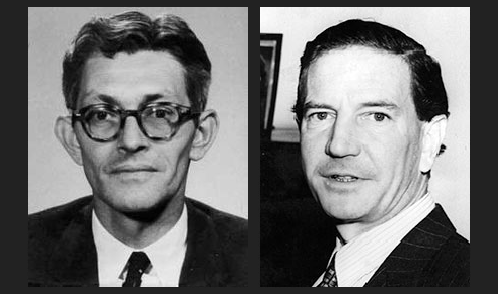
In the international intelligence community, (a loose term to cover spies, spy writers and spy groupies) there are two views on Kim Philby. One is that after he fled to Moscow he was a burnt-out case, a pathetic drunk living on the memory of his great triumph – fooling the West for thirty years. In this scenario, Philby drank to drown the thought of what might have been. If only he had not been so friendly with Guy Burgess, whose follies gave Philby away, he might have become director-general of the British Secret Intelligence Service, Sir Harold Philby, invulnerable to exposure and in a position to have handed the British and American services to Moscow on a plate.
The other view is that Philby’s greatest service to Communism came after he was forced to flee to Moscow, that just by being there he indirectly achieved victories in the intelligence war beyond the KGB’s wildest dreams. Supporters of the second view, and I am one, argue that Philby was instrumental in paralysing Western intelligence operations against the Soviet Union for ten years, that he ruined the careers of some of the CIA’s finest officers, that he neutralised a string of Soviet defectors, caused havoc in the British and French services, and generally undermined the whole conceptual basis of intelligence work.
Philby achieved this by tipping the spy-catcher for the Western world, the CIA officer James Jesus Angleton, into clinical madness. Philby had help, of course. Alcohol, Angleton’s own personality, the very nature of spy-catching, the power of bureaucracies, and the appalling inefficiency of the CIA’s system of checks and controls, all contributed to Angleton’s paranoia. But even Angleton would have had to admit that in Philby’s terrible personal treachery lies the key to understanding both what went wrong with Angleton and what went wrong with the CIA.
Angleton first met Philby in 1944 when Angleton was a raw counter-intelligence officer in OSS (Office of Strategic Services), a gung-ho outfit under the command of General ‘Wild Bill’ Donovan, who thought that the way to win the war was with clandestine groups operating behind enemy lines, a sort of American SOE. Philby was the glamorous, experienced SIS officer. The two worked in the same building in London, and although at that stage they were not close friends, contact had been made – they were on the same side and shared the same aim, the defeat of Fascism. So after the war, when Philby, rising steadily in SIS, was posted to Washington, one of the first Americans he looked up was James Angleton, who was still, like Philby, in the spy business. Philby, after a spell running SIS’s Soviet desk and a tour of field duty in Turkey, was the new SIS liaison officer with the CIA and the FBI, a job that put him at the heart of Western intelligence. Angleton was executive assistant to ADSO (the assistant director of Special Operations) and it was his job to look after Philby and the representatives of other friendly foreign intelligence services. The two men now became close. They lunched together regularly, dined at each other’s houses, met with their families for celebrations such as Thanksgiving. Mrs Angleton remembers them as genuine friends and when I spoke about Angleton to Philby in Moscow in 1988 he agreed that this was so. But all the time Philby was remorselessly using Angleton as his unwitting conduit to the secrets of the CIA. Angleton introduced Philby around, opened doors for him, vouched for him: ‘This is my friend Kim. We knew each other in London.’
When Burgess and Maclean fled to Moscow in May 1951 Philby came under suspicion by association. The reasoning was as follows: ‘Burgess is a Communist spy. He shared a house in Washington with Philby, the crack counter-intelligence officer. If Philby didn’t know, then he is a lousy counter-intelligence officer. If he did, then he is dirty too.’ Angleton would have none of this. He wrote a four-page memorandum to the CIA Director, General Walter Bedell Smith, defending Philby. Philby, Angleton said, had been duped by Burgess and knew nothing of Burgess’s work for the Soviets. He urged the Director to wait; his friend would soon be cleared. A year later, Angleton was still defending him. He told a US foreign service officer he met in Paris that Philby would one day be director-general of SIS.
It was not until 1963, when, with SIS and the CIA closing in on him, Philby fled to Moscow, that Angleton was forced to face the truth – Philby had betrayed him. His first reaction was to cover up. CIA regulations had required that after each official meeting with Philby in 1949-51 Angleton write up a record of what had been discussed. Angleton simply burned these records. But since he was now counter-intelligence chief of the CIA, he could not avoid a damage assessment on Philby. His 30-page report, according to CIA officers who read it, was poorly constructed and very uninformative – ‘an attempt to turn the spotlight away from Philby’. Yet to himself he was forced to admit that everything Philby had learnt about the CIA had come from the very officer whose job it was to protect that agency against this sort of penetration...
http://www.lrb.co.uk/v13/n13/phillip-knightley/when-kissinger-spied-for-russia
20160601
The Untold Story Behind Saudi Arabia’s 41-Year U.S. Debt Secret
It was July 1974. A steady predawn drizzle had given way to overcast skies when William Simon, newly appointed U.S. Treasury secretary, and his deputy, Gerry Parsky, stepped onto an 8 a.m. flight from Andrews Air Force Base. On board, the mood was tense. That year, the oil crisis had hit home. An embargo by OPEC’s Arab nations—payback for U.S. military aid to the Israelis during the Yom Kippur War—quadrupled oil prices. Inflation soared, the stock market crashed, and the U.S. economy was in a tailspin.
Officially, Simon’s two-week trip was billed as a tour of economic diplomacy across Europe and the Middle East, full of the customary meet-and-greets and evening banquets. But the real mission, kept in strict confidence within President Richard Nixon’s inner circle, would take place during a four-day layover in the coastal city of Jeddah, Saudi Arabia.
The goal: neutralize crude oil as an economic weapon and find a way to persuade a hostile kingdom to finance America’s widening deficit with its newfound petrodollar wealth. And according to Parsky, Nixon made clear there was simply no coming back empty-handed. Failure would not only jeopardize America’s financial health but could also give the Soviet Union an opening to make further inroads into the Arab world.
It “wasn’t a question of whether it could be done or it couldn’t be done,” said Parsky, 73, one of the few officials with Simon during the Saudi talks...
http://www.bloomberg.com/news/features/2016-05-30/the-untold-story-behind-saudi-arabia-s-41-year-u-s-debt-secret
20160409
DEEP HISTORY AND THE GLOBAL DRUG CONNECTION, PART 2: MURDER ON THE STREETS OF WASHINGTON
In the nearly 40 years since, some basic facts about the Letelier assassination have slowly come to light. Those facts are, for the most part, no longer contested.
It is now known that Letelier was killed on orders from the Chilean intelligence agency DINA, with the aid of a supranational collaborative assassination apparatus, Operation Condor, which the CIA helped to create.(14)
We shall look more closely at Condor and its drug connections in this book. What is particularly relevant here is that DINA, Condor, and the Cuban Americans who were involved in Letelier’s assassination were all also involved in drug trafficking.
There were American aspects to the killing as well as Chilean ones.(15) Shortly before the murder, secretary of state Kissinger blocked a proposed urgent State Department warning to Latin American Condor states not to engage in assassinations.(16)...
http://whowhatwhy.org/2016/04/07/deep-history-global-drug-connection-part-2-murder-streets-washington/
20160326
Is Obama serious about declassifying 'dirty war' docs?
Visiting Argentina on the 40th anniversary of the March 24, 1976, military coup that marked the beginning of that period was a political gamble—much less perhaps than his journey to the Castros' Havana—but a gamble nonetheless.
It was a watershed moment in a relationship that has been fraught for decades, in part because of a disturbing narrative of collusion between U.S. intelligence agencies and the Argentine military establishment which carried out the killings. Whether the narrative is true or not is almost incidental to its overwhelming power in Argentine society.
As so often happens in diplomacy, Obama was forced to strike a delicate balance on this trip.
For example, accusations of the involvement of former Secretary of State Henry Kissinger loom large in the dirty-war narrative, though Kissinger has denied them.
And yet, in public speeches Obama steered clear of mentioning Kissinger or addressing his alleged role. His silence on the subject was deafening.
But Obama also extolled certain Americans who took huge risks to expose the atrocities of the dirty war. Obama praised Patt Derian, the assistant secretary of state for human rights under President Jimmy Carter -- who raised the alarm inside the State Department -- and Tex Harris, the courageous U.S. Embassy officer who documented human rights abuses and identified the missing. The President should be commended for recognizing these heroes.
As a whole, the trip was exactly what Obama does best: From dancing the tango and drinking mate tea to giving a moving tribute to the victims of the dirty war, Obama basked in applause from an Argentine public often critical of American policy, and a new pro-free market, pro-U.S. government...
20160219
Henry Kissinger’s War Crimes Are Central to the Divide Between Hillary Clinton and Bernie Sanders
Clinton and Sanders stand on opposite sides of that divide. One represents the hawkish Washington foreign policy establishment, which reveres and in some cases actually works for Kissinger. The other represents the marginalized non-interventionists, who can’t possibly forgive someone with the blood of millions of brown people on his hands.
Kissinger is an amazing and appropriate lens through which to see what’s at stake in the choice between Clinton and Sanders. But that only works, of course, if you understand who Kissinger is — which surely many of today’s voters don’t.
Some may only dimly recall that Kissinger won a Nobel Peace Prize for his efforts to end the Vietnam War (comedian Tom Lehrer famously said the award made political satire obsolete), and that he played a central role in President Nixon’s opening of relations with China.
But Kissinger is reviled by many left-leaning observers of foreign policy. They consider him an amoral egotist who enabled dictators, extended the Vietnam War, laid the path to the Khmer Rouge killing fields, stage-managed a genocide in East Timor, overthrew the democratically elected left-wing government in Chile, and encouraged Nixon to wiretap his political adversaries.
First, let’s review what happened at the debate. Here’s the video, followed by the transcript:..
https://theintercept.com/2016/02/12/henry-kissingers-war-crimes-are-central-to-the-divide-between-hillary-clinton-and-bernie-sanders/
20140901
Henry Kissinger on the Assembly of a New World Order
The search for world order has long been defined almost exclusively by the concepts of Western societies. In the decades following World War II, the U.S.—strengthened in its economy and national confidence—began to take up the torch of international leadership and added a new dimension. A nation founded explicitly on an idea of free and representative governance, the U.S. identified its own rise with the spread of liberty and democracy and credited these forces with an ability to achieve just and lasting peace. The traditional European approach to order had viewed peoples and states as inherently competitive; to constrain the effects of their clashing ambitions, it relied on a balance of power and a concert of enlightened statesmen. The prevalent American view considered people inherently reasonable and inclined toward peaceful compromise and common sense; the spread of democracy was therefore the overarching goal for international order. Free markets would uplift individuals, enrich societies and substitute economic interdependence for traditional international rivalries.
This effort to establish world order has in many ways come to fruition. A plethora of independent sovereign states govern most of the world's territory. The spread of democracy and participatory governance has become a shared aspiration if not a universal reality; global communications and financial networks operate in real time.
The years from perhaps 1948 to the turn of the century marked a brief moment in human history when one could speak of an incipient global world order composed of an amalgam of American idealism and traditional European concepts of statehood and balance of power. But vast regions of the world have never shared and only acquiesced in the Western concept of order. These reservations are now becoming explicit, for example, in the Ukraine crisis and the South China Sea. The order established and proclaimed by the West stands at a turning point...
http://online.wsj.com/articles/henry-kissinger-on-the-assembly-of-a-new-world-order-1409328075
20130609
20111113
20110319
How Knowledge Changes Us
"This blog isn’t really about politics, but sometimes I’ll veer into the psychology of politics. For example, when people hold high office they change a zillion different ways. They have power, with all the attendant corruptions. They become the center of every room they enter, with all the attendant narcissism. They also have inside information, and often leap to the conclusion that people who don’t have this information are simply not worth listening to.
I’ve asked two presidents and several former CIA directors if the top secret information they have access to gives them an entirely different picture of the world than the rest of us, who rely on the Times and other public media sources. The general answer I get is that the secret information gives you more granularity, but it doesn’t really change the basic way you see the world..." http://brooks.blogs.nytimes.com/2011/03/14/knowledge-corrupts/20110316
Kissinger: Release Israeli spy Pollard
"...Saying he found the arguments of other top former U.S. national security officials “compelling,” former Secretary of State Henry Kissinger on Monday called for President Obama to commute the remainder of Israeli spy Jonathan Pollard’s life sentence.
"At first I felt I did not have enough information to render a reasoned and just opinion,” Kissinger said in his Mar. 3 letter, released today by a public relations firm that has been lobbying for the release of Pollard, sentenced to life in prison for espionage in 1987. “But having talked with [former Secretary of State] George Shultz and read the statements of former CIA Director [R. James] Woolsey, former Senate Intelligence Committee Chairman [Dennis] DeConcini, former Defense Secretary [Caspar] Weinberger, former Attorney General [Michael] Mukasey and others whose judgments and first-hand knowledge I respect, I find their unanimous support for clemency compelling...” http://voices.washingtonpost.com/spy-talk/2011/03/kissinger_release_israeli_s...20110313
20110226
Wiki: Kissinger Associates
From Wikipedia, the free encyclopedia
Jump to: navigation, searchKissinger Associates, Inc., founded in 1982, is a New York City-based international consulting firm, founded and run by Henry Kissinger, Brent Scowcroft, and Lawrence Eagleburger. The firm assists its clients in identifying strategic partners and investment opportunities, and advises clients on government relations throughout the world.
Contents
[hide][edit] History
The firm was founded in 1982 by Henry Kissinger.
In 1999, Mack McLarty joined Kissinger to open Kissinger McLarty Associates, the firm's office on Eighteenth and Pennsylvania streets in Washington, D.C.[1]. McLarty was White House Chief of Staff under Bill Clinton. Kissinger McLarty is a corporate member of the Council of the Americas, the New York-based business organization established by David Rockefeller in 1965.[1] As of January 2008, the two firms have separated and McLarty Associates, headed by Mack McLarty, is an independent firm based in Washington.[2]
Kissinger Associates is located in River House on Park Avenue at Fifty-first Street, in a building also occupied by Peter Peterson's Blackstone Group.[3] It was established in July, 1982 after loans had been secured from Goldman Sachs and a consortium of three other banks. These loans were paid out in two years; by 1987 annual revenues had reached $5 million.[3]
[edit] Associated organizations and individuals
Kissinger Associates has had strategic alliances with several firms, including:
- APCO Worldwide, formed October 12, 2004 [4]
- The Blackstone Group[5], an investment and advisory firm
- Hakluyt & Company[6], a corporate investigation firm
- Covington & Burling, the international law firm, since 2003.[7]
Prominent staff have included:
- L. Paul Bremer, former managing director. Former Iraq Director of Reconstruction.
- Nelson Cunningham, managing partner at Kissinger McLarty
- Lawrence Eagleburger, former partner[8]
- Richard W. Fisher - President, Federal Reserve Bank of Dallas [1]
- Timothy F. Geithner - United States Secretary of Treasury
- Jami Miscik - president and vice chairman. Deputy Director for Intelligence, Central Intelligence Agency.
- Joshua Cooper Ramo - Managing Director
- Bill Richardson, former Senior managing director. Former U.S diplomat and current Governor of New Mexico.
- J. Stapleton Roy, vice-chairman. Senior U.S. diplomat.
- Brent Scowcroft, former vice-chairman. Former United States National Security Advisor.
Directors have included:
- Lord Carrington, from 1982.[9] Secretary-General of NATO
- Pehr G. Gyllenhammar, from 1982.[9] Chairman, Volvo
- William D. Rogers, from 1982.[9] Undersecretary of State for Economic Affairs under Nixon
- Eric Roll, from 1984[10]. Chairman S. G. Warburg & Co
- William E. Simon, from 1984[10]. Secretary of the Treasury under Nixon
- Saburo Okita[11], former Japanese Foreign Minister
- Étienne Davignon[12] Former European Commissioner.
- Gary Falle, Falle Strategies
[edit] Client base
Kissinger Associates does not disclose its list of corporate clients, and reportedly bars clients from acknowledging the relationship.[11] However, over time details from proxy statements and the tendency of senior businessmen to talk about their relationship with Kissinger have leaked out and a number of major corporate clients have been identified.[13]
The secrecy of their corporate client list has caused problems where Kissinger or a member of his staff were called to public service. In 1989, George H.W. Bush nominated Lawrence Eagleburger as his Deputy Secretary of State. Congress required that Eagleburger disclose the names of 16 clients, some of which were his through his Kissinger Associates affiliation.[14]. Later, Kissinger himself was appointed chairman of the National Commission on Terrorist Attacks Upon the United States by George W. Bush. Congressional Democrats insisted that Kissinger disclose the names of clients. Kissinger and President Bush claimed that such disclosures were not necessary, but Kissinger ultimately stepped down, citing conflicts of interest.
A selected list of the more notable companies (from over two dozen in total) since 1982;[13] his directorships where applicable; and some countries where known advice/contacts were used:
- American Express - Director (Hungary, Japan)
- American International Group - Director, International Advisory Committee (Argentina, China, South Korea)
- Atlantic Richfield
- Chase Manhattan Bank (now JPMorgan Chase) - Chairman, International Advisory Committee
- Coca-Cola (Malaysia)
- Fiat
- Freeport-McMoRan - Director (Burma, Indonesia, Panama)
- Heinz (Ivory Coast, Turkey, Zimbabwe)
- Hollinger, Inc. - Director
- Lehman Brothers Kissinger McLarty Assoc. is listed as a creditor in the Bankruptcy Filings.
- Merck
- Volvo
- Warburg
[edit] Bibliography
- Isaacson, Walter, Kissinger: A Biography, New York: Simon & Schuster, 1992, updated 2005.
[edit] References
- ^ a b "Council of the Americas Member: Kissinger McLarty Associates". Council of the Americas. http://www.americas-society.org/coa/membersnetwork/Kissinger.html.
- ^ http://www.maglobal.com maglobal.com
- ^ a b Isaacson, Kissinger, p.732.
- ^ "Kissinger Associates, APCO Join in Strategic Alliance". APCO Worldwide. October 12, 2004. http://www.apcoworldwide.com/content/newsroom/press_releases/10_12_04.cfm.
- ^ "Strategic alliances". the Blackstone Group. http://www.blackstone.com/mergers/stalliances.html.
- ^ Andrew Edgecliffe-Johnson (April 10, 2001). "Survey - Corporate Security: The top players in intelligence industry". Financial Times. http://www.smithbrandon.com/news.aspx?id=39.
- ^ Sarasohn, Judy (October 2, 2003). "Making an Alliance Official". Washington Post. http://pqasb.pqarchiver.com/washingtonpost/access/416939251.html?dids=416939251:416939251&FMT=FT&FMTS=ABS:FT&fmac=&date=OCT+02%2C+2003&author=Judy+Sarasohn&desc=Making+an+Alliance+Official.
- ^ John Kerry & Hank Brown. "BCCI and Kissinger Associates". The BCCI Affair. United States Congress. http://www.fas.org/irp/congress/1992_rpt/bcci/20kiss.htm.
- ^ a b c Oberdorfer, Don (August 24, 1982). "Kissinger's New Team". Washington Post. https://secure.pqarchiver.com/washingtonpost_historical/access/124943422.html?dids=124943422:124943422&FMT=FT&FMTS=ABS:FT&fmac=&date=AUG+24%2C+1982&author=By+Don+Oberdorfer+Washington+Post+Staff+Writer&desc=Kissinger%27s+New+Team.
- ^ a b Gilpin, Kenneth N. (June 1, 1984). "Eagleburger Is Joining Kissinger Associates". New York Times. http://select.nytimes.com/search/restricted/article?res=F2081FFE3E5F0C728CDDAF0894DC484D81.
- ^ a b Gelb, Leslie H. (April 20, 1986). "Kissinger Means Business". New York Times. http://select.nytimes.com/search/restricted/article?res=F50711FD385D0C738EDDAD0894DE484D81.
- ^ "Etienne Davignon delivers the plenary address on the third day of EITC 97". European Union Publications Office. http://cordis.europa.eu/esprit/src/biodavig.htm.
- ^ a b Isaacson, Kissinger: A Biography, pp.730-751.
- ^ Gerth, Jeff (May 20, 1989). "Disclosure Sought From Policy Group". New York Times. http://query.nytimes.com/gst/fullpage.html?res=950DE3D7133EF933A15756C0A96F948260.
[edit] External links
Retrieved from "http://en.wikipedia.org/wiki/Kissinger_Associates"
Also see: http://www.sourcewatch.org/index.php?title=Kissinger_Associates%2C_Inc.