Showing posts with label Quantitative Easing. Show all posts

20160214

What's holding back the world economy?

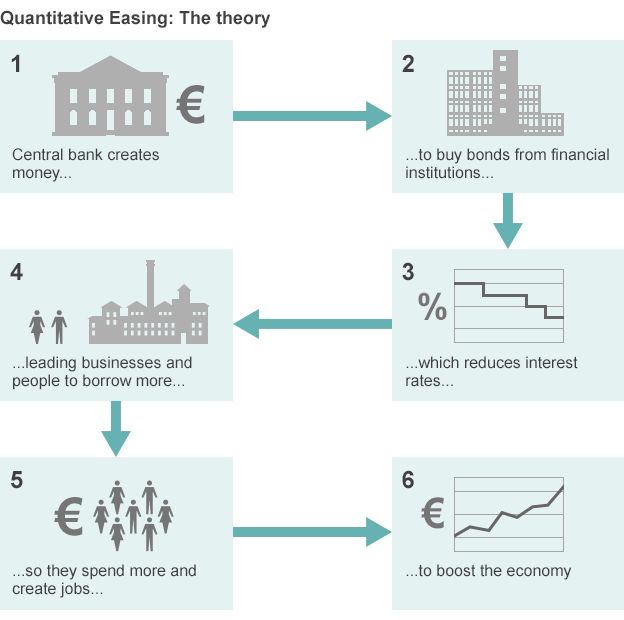
QE and low interest rates have disproportionately created wealth in the financial sector and inflated asset bubbles. It has done little for the real economy. The rules of the market need to be rewritten
Seven years after the global financial crisis erupted in 2008, the world economy continued to stumble in 2015. According to the United Nations’ report World Economic Situation and Prospects 2016, the average growth rate in developed economies has declined by more than 54% since the crisis. An estimated 44 million people are unemployed in developed countries, about 12 million more than in 2007, while inflation has reached its lowest level since the crisis.

More worryingly, advanced countries’ growth rates have also become more volatile. This is surprising, because, as developed economies with fully open capital accounts, they should have benefited from the free flow of capital and international risk sharing – and thus experienced little macroeconomic volatility. Furthermore, social transfers, including unemployment benefits, should have allowed households to stabilise their consumption.

But the dominant policies during the post-crisis period – fiscal retrenchment and quantitative easing (QE) by major central banks – have offered little support to stimulate household consumption, investment, and growth. On the contrary, they have tended to make matters worse.

In the US, quantitative easing did not boost consumption and investment partly because most of the additional liquidity returned to central banks’ coffers in the form of excess reserves. The Financial Services Regulatory Relief Act of 2006, which authorised the Federal Reserve to pay interest on required and excess reserves, thus undermined the key objective of QE...

20131112

Andrew Huszar: Confessions of a Quantitative Easer


I can only say: I'm sorry, America. As a former Federal Reserve official, I was responsible for executing the centerpiece program of the Fed's first plunge into the bond-buying experiment known as quantitative easing. The central bank continues to spin QE as a tool for helping Main Street. But I've come to recognize the program for what it really is: the greatest backdoor Wall Street bailout of all time.

Five years ago this month, on Black Friday, the Fed launched an unprecedented shopping spree. By that point in the financial crisis, Congress had already passed legislation, the Troubled Asset Relief Program, to halt the U.S. banking system's free fall. Beyond Wall Street, though, the economic pain was still soaring. In the last three months of 2008 alone, almost two million Americans would lose their jobs.

The Fed said it wanted to help—through a new program of massive bond purchases. There were secondary goals, but Chairman Ben Bernanke made clear that the Fed's central motivation was to "affect credit conditions for households and businesses": to drive down the cost of credit so that more Americans hurting from the tanking economy could use it to weather the downturn. For this reason, he originally called the initiative "credit easing..."

http://online.wsj.com/news/articles/SB10001424052702303763804579183680751473884