Showing posts with label economics. Show all posts

20170201

Wiki: Precariat


In sociology and economics, the precariat is a social class formed by people suffering from precarity, which is a condition of existence without predictability or security, affecting material or psychological welfare. Unlike the proletariat class of industrial workers in the 20th century who lacked their own means of production and hence sold their labour to live, members of the precariat are only partially involved in labour and must undertake extensive "unremunerated activities that are essential if they are to retain access to jobs and to decent earnings". Specifically, it is the condition of lack of job security, including intermittent employment or underemployment and the resultant precarious existence.[1] The emergence of this class has been ascribed to the entrenchment of neoliberal capitalism.[2][3]

The term is a portmanteau obtained by merging precarious with proletariat.[4]...

20170108

Record 95,102,000 Americans Not In Labor Force; Unemployment Rate More Like 30%


The “official” unemployment rate (U3) released each month is, to put it in the most straight-forward way possible, a completely misleading and politicized statistic.

The U3 unemployment rate, which is one of 6 ways the U.S. Bureau of Labor Statistics calculates the amount of people out of work, is defined as the “total unemployed, as a percent of the civilian labor force.”

This is the 4.7% number which came out today and the statistic that soon-to-be former President Barrack Obama has boasted so proudly over.

You remember this, right? …

Obama: “I took an economy that was about to go into a Great Depression, and we’ve now had a little over six years of straight economic job growth, an unemployment rate that’s down below 5 percent, and incomes that have gone up and poverty that has gone down.”

Well, today we found out that a record number of Americans are not in the labor force and are not even looking for a job, the same way it was when Obama first stepped into office.

The final jobs report of Obama’s presidency revealed that the number of Americans not in the labor force has increased by 14,573,000 (18.09 percent) since January 2009...

http://www.activistpost.com/2017/01/record-95102000-americans-not-labor-force-unemployment-rate-like-30.html

20160828

Rothschild Net Worth: Billionaire Family Dumps US Dollar For Gold


The Rothschild family recently said that they are shifting from the U.S. Dollar, which is considered the global reserve currency, into gold and “other currencies.”

The Rothschild family is currently being headed by Lord Jacob Rothschild.

The decision to move to gold was addressed by Lord Jacob Rothschild in a statement. “Our significant U.S. Dollar position has now been somewhat reduced as, following the Dollar’s rise, we saw interesting opportunities in other currencies as well as gold, the latter reflecting our concerns about monetary policy and ever declining real yields,” the report said.

Lord Jacob Rothschild: The world is in ‘uncharted waters’

As reported by the Dollar Vigilante, by 19th century, it came to light that the Rothschild family held around half of the world’s wealth. The Rothschild family has said that they will be limiting stock market and currency exposure, and will up their gold holdings. Lord Jacob Rothschild warned that the world is in “uncharted waters,” with consequences being “impossible” to foresee.

Like us on Facebook
Also read: ‘Miss Universe’ 2016 Update – PH President Duterte Considers Pageant A Waste Of Money?

“It is impossible to predict the unintended consequences of very low interest rates, with some 30% of global government debt at negative yields, combined with quantitative easing on a massive scale,” Lord Jacob Rothschild said...

http://www.morningnewsusa.com/rothschild-net-worth-billionaire-family-dumps-us-dollar-gold-2399454.html

20160601

The Untold Story Behind Saudi Arabia’s 41-Year U.S. Debt Secret


Failure was not an option.

It was July 1974. A steady predawn drizzle had given way to overcast skies when William Simon, newly appointed U.S. Treasury secretary, and his deputy, Gerry Parsky, stepped onto an 8 a.m. flight from Andrews Air Force Base. On board, the mood was tense. That year, the oil crisis had hit home. An embargo by OPEC’s Arab nations—payback for U.S. military aid to the Israelis during the Yom Kippur War—quadrupled oil prices. Inflation soared, the stock market crashed, and the U.S. economy was in a tailspin.

Officially, Simon’s two-week trip was billed as a tour of economic diplomacy across Europe and the Middle East, full of the customary meet-and-greets and evening banquets. But the real mission, kept in strict confidence within President Richard Nixon’s inner circle, would take place during a four-day layover in the coastal city of Jeddah, Saudi Arabia.

The goal: neutralize crude oil as an economic weapon and find a way to persuade a hostile kingdom to finance America’s widening deficit with its newfound petrodollar wealth. And according to Parsky, Nixon made clear there was simply no coming back empty-handed. Failure would not only jeopardize America’s financial health but could also give the Soviet Union an opening to make further inroads into the Arab world.

It “wasn’t a question of whether it could be done or it couldn’t be done,” said Parsky, 73, one of the few officials with Simon during the Saudi talks...

http://www.bloomberg.com/news/features/2016-05-30/the-untold-story-behind-saudi-arabia-s-41-year-u-s-debt-secret

20160416

Saudi Arabia Threatens To Liquidate Its Treasury Holdings If Congress Probes Its Role In Sept 11 Attacks


Back in January, when the market was watching in shocked silence as oil prices were crashing to decade lows and as concerns emerged that Saudi Arabia may need to commence selling its vast, if unquantified, USD reserves, we wrote a post titled "Attention Finally Turns To Saudi Arabia's "Secret" US Treasury Holdings" where we noted something very surprising: whereas we do know that Saudi Arabia is the owner of the world's third largest USD reserves...

... their actual composition remains as a secret, because while the US discloses the explicit Treasury holdings of all other nations, Saudi Arabia's holdings, for some unknown reason, are not officially disclosed.

"It’s a secret of the vast U.S. Treasury market, a holdover from an age of oil shortages and mighty petrodollars," Bloomberg wrote of Saudi Arabia’s US Treasury holdings.

"As a matter of policy, the Treasury has never disclosed the holdings of Saudi Arabia, long a key ally in the volatile Middle East, and instead groups it with 14 other mostly OPEC nations including Kuwait, the United Arab Emirates and Nigeria,” Bloomberg goes on to note, adding that the rules are different for almost everyone else. Although Saudi Arabia's "secret" is protected by "an unusual blackout by the U.S. Treasury Department," for more than a hundred other countries, from China to the Vatican, the Treasury provides a detailed breakdown of how much U.S. debt each holds."

So who does know how much US paper the Saudis are sitting on? Well, the Saudis of course,"a handful of Treasury officials," and some bureaucrats at the Fed, Bloomberg says, noting that “for everyone else, it’s a guessing game."

Yes, a “guessing game,” but one that will very soon have profound consequences for markets and for geopolitics.

We closed with a simple, if suddenly very prophetic question:

"who would be the new patron saint of the US Treasury Department in the event the Saudis drawdown all of their reserves and decide to diversify away from USD assets... Put differently, who will monetize the US deficit if relations between Washington and Riyadh hit the skids over Iran?"
It is this question that has suddenly reemerged with a bang, and could rock the US administration to its core as what until recently was a "fringe conspiracy theory" is suddenly exposed as an all too unpleasant fact, and becomes the biggest political scandal to rock the U.S. in years, in the process maybe even crushing the friendly diplomatic relations the U.S. has held for years with its biggest Mid-East ally, Saudi Arabia.

* * *

First, a quick tangent: we have been greatly surprised by the reemergence of the topic of September 11 in recent weeks, and specifically the taboo - in official circles - issue whether there was a "Saudi connection" in the biggest terrorist attack on US soil. Just last weekend, out of the blue, 60 Minutes held segment on the "28 pages" that were classified in the Congressional investigative report into 9/11 - pages that allegedly confirm the Saudi connection.

To be sure, Saudi officials have long denied that the kingdom had any role in the Sept. 11 plot, and the 9/11 Commission found “no evidence that the Saudi government as an institution or senior Saudi officials individually funded the organization.” But critics have noted that the commission’s narrow wording left open the possibility that less senior officials or parts of the Saudi government could have played a role. Suspicions have lingered, partly because of the conclusions of a 2002 congressional inquiry into the attacks that cited some evidence that Saudi officials living in the United States at the time had a hand in the plot.

Those conclusions, contained in 28 pages of the report, still have not been released publicly. It was the surprising rekindled focus on these 28 pages in recent days that suggested that something may have been afoot.

Something was...

http://www.zerohedge.com/news/2016-04-16/saudi-arabia-threatens-us-it-will-liquidate-its-treasury-holdings-if-congress-passes

20160405

I Know Why Poor Whites Chant Trump, Trump, Trump

I met the man who said those words while working as a bartender in the Ozark Mountains of northwest Arkansas. It was a one-street town in Benton County. It had a beauty parlor, a gas station, and a bar where locals came on Friday nights to shoot the shit over cheap drinks and country music. I arrived in Arkansas by way of another little town in Louisiana, where all but a few local businesses had boarded up when Walmart moved in. In Arkansas, I was struggling to survive. I served drinks in the middle of the afternoon to people described as America’s “white underclass” — in other words, people just like me.

Across the highway from the bar was the trailer park where I lived. I bought my trailer for $1000, and it looked just like you would imagine a trailer that cost $1000 would look. There was a big hole in the ceiling, and parts of the floor were starting to crumble under my feet. It leaned to one side, and the faint odor of death hung around the bathroom. No doubt a squirrel or a rat had died in the walls. I told myself that once the flesh was gone, dissolved into the nothingness, the smell would go away, but it never did. Maybe that’s what vermin ghosts smell like.

I loved that trailer. Sitting in a ratty brown La-Z-Boy, I would look around my tin can and image all the ways I could paint the walls in shades of possibility. I loved it for the simple reason that it was the first and only home I have ever owned.

My trailer was parked in the middle of Walmart country, which is also home to J.B. Hunt Transportation, Glad Manufacturing, and Tyson Chicken. There is a whole lot of money in that pocket of Arkansas, but the grand wealth casts an oppressive shadow over a region entrenched in poverty. Executive mansions line the lakefronts and golf courses. On the other side of Country Club Road, trailer parks are tucked back in the woods. The haves and have-nots rarely share the same view, with one exception: politics. Benton County has been among the most historically conservative counties in Arkansas. The last Democratic president Benton County voted for was Harry S. Truman, in 1948...

http://www.stirjournal.com/2016/04/01/i-know-why-poor-whites-chant-trump-trump-trump/

20160214

What's holding back the world economy?

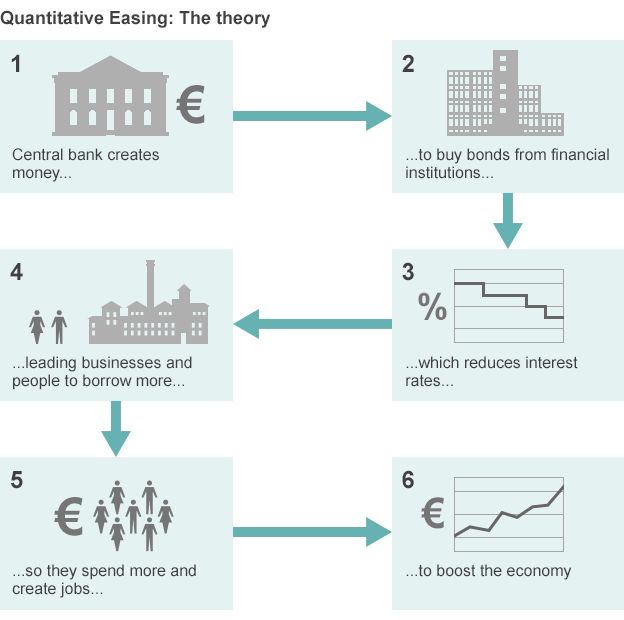
QE and low interest rates have disproportionately created wealth in the financial sector and inflated asset bubbles. It has done little for the real economy. The rules of the market need to be rewritten
Seven years after the global financial crisis erupted in 2008, the world economy continued to stumble in 2015. According to the United Nations’ report World Economic Situation and Prospects 2016, the average growth rate in developed economies has declined by more than 54% since the crisis. An estimated 44 million people are unemployed in developed countries, about 12 million more than in 2007, while inflation has reached its lowest level since the crisis.

More worryingly, advanced countries’ growth rates have also become more volatile. This is surprising, because, as developed economies with fully open capital accounts, they should have benefited from the free flow of capital and international risk sharing – and thus experienced little macroeconomic volatility. Furthermore, social transfers, including unemployment benefits, should have allowed households to stabilise their consumption.

But the dominant policies during the post-crisis period – fiscal retrenchment and quantitative easing (QE) by major central banks – have offered little support to stimulate household consumption, investment, and growth. On the contrary, they have tended to make matters worse.

In the US, quantitative easing did not boost consumption and investment partly because most of the additional liquidity returned to central banks’ coffers in the form of excess reserves. The Financial Services Regulatory Relief Act of 2006, which authorised the Federal Reserve to pay interest on required and excess reserves, thus undermined the key objective of QE...

20131112

Andrew Huszar: Confessions of a Quantitative Easer


I can only say: I'm sorry, America. As a former Federal Reserve official, I was responsible for executing the centerpiece program of the Fed's first plunge into the bond-buying experiment known as quantitative easing. The central bank continues to spin QE as a tool for helping Main Street. But I've come to recognize the program for what it really is: the greatest backdoor Wall Street bailout of all time.

Five years ago this month, on Black Friday, the Fed launched an unprecedented shopping spree. By that point in the financial crisis, Congress had already passed legislation, the Troubled Asset Relief Program, to halt the U.S. banking system's free fall. Beyond Wall Street, though, the economic pain was still soaring. In the last three months of 2008 alone, almost two million Americans would lose their jobs.

The Fed said it wanted to help—through a new program of massive bond purchases. There were secondary goals, but Chairman Ben Bernanke made clear that the Fed's central motivation was to "affect credit conditions for households and businesses": to drive down the cost of credit so that more Americans hurting from the tanking economy could use it to weather the downturn. For this reason, he originally called the initiative "credit easing..."

http://online.wsj.com/news/articles/SB10001424052702303763804579183680751473884

20131103

Conned, seduced and intimidated by The Rich

Governments deliberately create economic crises so that they then have an excuse to privatize public property and reduce spending on the poor.

"The financial oligarchy ... has embarked on an unprecedented economic coup d’état against the people, the ravages of which include extensive privatization of the public sector, systematic application of neoliberal austerity economics and radical redistribution of resources from the bottom to the top...

http://aangirfan.blogspot.com/2013/11/conned-seduced-and-intimidated-by-rich.html

20130408

Plutonomy: Buying Luxury, Explaining Global Imbalances.


SUMMARY
  • ➤  The World is dividing into two blocs - the Plutonomy and the rest. The U.S., UK, and Canada are the key Plutonomies - economies powered by the wealthy. Continental Europe (ex-Italy) and Japan are in the egalitarian bloc.
  • ➤  Equity risk premium embedded in “global imbalances” are unwarranted. In plutonomies the rich absorb a disproportionate chunk of the economy and have a massive impact on reported aggregate numbers like savings rates, current account deficits, consumption levels, etc. This imbalance in inequality expresses itself in the standard scary “ global imbalances”. We worry less.
  • ➤  There is no “average consumer” in a Plutonomy. Consensus analyses focusing on the “average” consumer are flawed from the start. The Plutonomy Stock Basket outperformed MSCI AC World by 6.8% per year since 1985. Does even better if equities beat housing. Select names: Julius Baer, Bulgari, Richemont, Kuoni, and Toll Brothers... 

http://www.sourcewatch.org/images/8/86/CITIGROUP-OCTOBER-16-2005-PLUTONOMY-MEMO.pdf

20111128

Secret Fed Loans Gave Banks Undisclosed $13B

The Federal Reserve and the big banks fought for more than two years to keep details of the largest bailout in U.S. history a secret. Now, the rest of the world can see what it was missing.

The Fed didn’t tell anyone which banks were in trouble so deep they required a combined $1.2 trillion on Dec. 5, 2008, their single neediest day. Bankers didn’t mention that they took tens of billions of dollars in emergency loans at the same time they were assuring investors their firms were healthy. And no one calculated until now that banks reaped an estimated $13 billion of income by taking advantage of the Fed’s below-market rates, Bloomberg Markets magazine reports in its January issue.

Saved by the bailout, bankers lobbied against government regulations, a job made easier by the Fed, which never disclosed the details of the rescue to lawmakers even as Congress doled out more money and debated new rules aimed at preventing the next collapse.