Showing posts with label biometrics. Show all posts

20161019

The Perpetual Line-Up


I. EXECUTIVE SUMMARY
There is a knock on your door. It’s the police. There was a robbery in your neighborhood. They have a suspect in custody and an eyewitness. But they need your help: Will you come down to the station to stand in the line-up?

Most people would probably answer “no.” This summer, the Government Accountability Office revealed that close to 64 million Americans do not have a say in the matter: 16 states let the FBI use face recognition technology to compare the faces of suspected criminals to their driver’s license and ID photos, creating a virtual line-up of their state residents. In this line-up, it’s not a human that points to the suspect—it’s an algorithm.

But the FBI is only part of the story. Across the country, state and local police departments are building their own face recognition systems, many of them more advanced than the FBI’s. We know very little about these systems. We don’t know how they impact privacy and civil liberties. We don’t know how they address accuracy problems. And we don’t know how any of these systems—local, state, or federal—affect racial and ethnic minorities.

One in two American adults is in a law enforcement face recognition network.
This report closes these gaps. The result of a year-long investigation and over 100 records requests to police departments around the country, it is the most comprehensive survey to date of law enforcement face recognition and the risks that it poses to privacy, civil liberties, and civil rights. Combining FBI data with new information we obtained about state and local systems, we find that law enforcement face recognition affects over 117 million American adults. It is also unregulated. A few agencies have instituted meaningful protections to prevent the misuse of the technology. In many more cases, it is out of control.

The benefits of face recognition are real. It has been used to catch violent criminals and fugitives. The law enforcement officers who use the technology are men and women of good faith. They do not want to invade our privacy or create a police state. They are simply using every tool available to protect the people that they are sworn to serve. Police use of face recognition is inevitable. This report does not aim to stop it.

Rather, this report offers a framework to reason through the very real risks that face recognition creates. It urges Congress and state legislatures to address these risks through commonsense regulation comparable to the Wiretap Act. These reforms must be accompanied by key actions by law enforcement, the National Institute of Standards and Technology (NIST), face recognition companies, and community leaders...

https://www.perpetuallineup.org

20160503

Your phone’s biggest vulnerability is your fingerprint

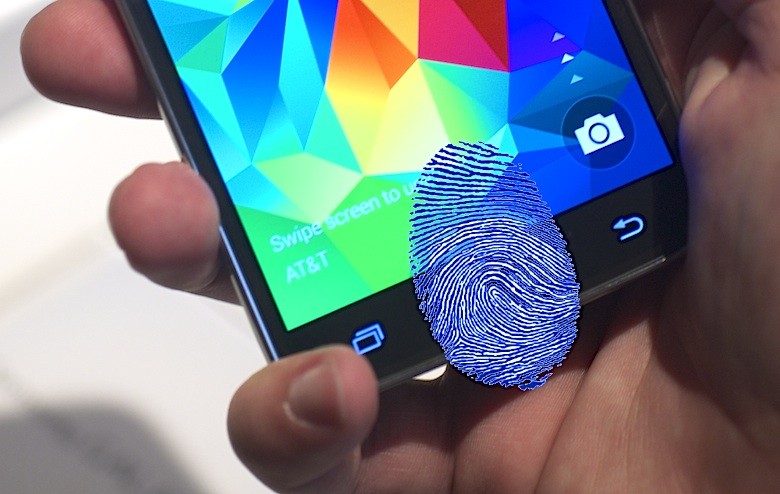
In five minutes, a single person faked a fingerprint and broke into my phone. It was simple, a trick the biometrics firm Vkansee has been playing at trade shows for months now. All it took was some dental mold to take a cast, some play-dough to fill it, and then a little trial and error to line up the play-dough on the fingerprint reader. We did it twice with the same print: once on an iPhone 6 and once on a Galaxy S6 Edge. As hacks go, it ranks just a little harder than steaming open a letter.

Of course, this particular method only works if you have help from the person whose fingerprint you need — and even then, it’s not a foolproof system. As luck would have it, my own fingertips turned out to be too smooth to leave an impression, so we had to rely on our director Phil Esposito, who had his thumb successfully molded and used it to unlock both phones.

It’s also one of the more primitive ways to bypass a fingerprint scanner. I’ve seen researchers at CITER pull off a similar trick with a 3D-printed mold, developed from a stored image rather than a real finger. If the mold is filled with rubber, you can wear that print permanently, and fool any reader small enough to fit on a smartphone. At the CCC conference in 2014, a security researcher called Starbug used those techniques to construct a working model of the German defense minister’s fingerprint, based on a high-res photograph of the minister’s hand...

http://www.theverge.com/2016/5/2/11540962/iphone-samsung-fingerprint-duplicate-hack-security

20140804

FBI Refuses To Let Public Know How Its Drone Usage Affects Their Privacy


The FBI's production of privacy impact assessments (PIAs) lags far behind its deployment of privacy-impacting technology. From facial recognition software to Stingray devices to its drone usage, the FBI has always violated privacy first and assessed the damage later. In some cases, it hasn't bothered to assess the impact at all, despite repeated assurances to questioning lawmakers that the required report (and it is required) is (forever) nearing completion.

Its biometric database, which pulls in photos from all over the place for its facial recognition software to peruse, rolled out without the required PIA in 2012. Two years later, the FBI is still promising Eric Holder that the PIA will be completed literally any month now, even as it hopes to have the system fully operational by the end of the 2014 fiscal year.

It has supposedly cranked out a PIA for its drone use -- again lagging far behind its first reported deployments in "late 2006." But the public apparently isn't allowed to know how the agency's drone use impacts its privacy. Instead of placing the assessment on its website for public viewing (the default method), the FBI has stashed it behind every shady government entity's favorite FOIA exception: b(5). ..

20130731

The Door to the FISA Court


Nobody will actually tell you where the door to the Foreign Intelligence Surveillance Court — also known as the "FISA Court" — is. It's understood to have moved from the Department of Justice to the E. Barrett Prettyman Courthouse in 2009, but when I visited Prettyman, the employees in the first floor District Clerk's office (gently) laughed at my attempts to find anything about the Court. They referred to it as the "Room of Requirement", and said they had no idea what floor it was even on.

But if you walk through each floor of the Courthouse, and if you believe the Washington Post's 2009 description of the FISA Court door as having "biometric hand scanners" and being in a "public hallway", then it becomes pretty obvious that on the 3rd floor's solemn hallway, you've found your door:...

http://konklone.com/post/the-door-to-the-fisa-court

20130512

Biometric Database of All Adult Americans Hidden in Immigration Reform

The immigration reform measure the Senate began debating yesterday would create a national biometric database of virtually every adult in the U.S., in what privacy groups fear could be the first step to a ubiquitous national identification system.

Buried in the more than 800 pages of the bipartisan legislation (.pdf) is language mandating the creation of the innocuously-named “photo tool,” a massive federal database administered by the Department of Homeland Security and containing names, ages, Social Security numbers and photographs of everyone in the country with a driver’s license or other state-issued photo ID.

Employers would be obliged to look up every new hire in the database to verify that they match their photo...

20120329

Japanese camera can scan 36 million faces per second | Mail Online

A new camera technology from Hitachi Hokusai Electric can scan days of camera footage instantly, and find any face which has EVER walked past it.

Its makers boast that it can scan 36 million faces per second. 

The technology raises the spectre of governments - or other organisations - being able to 'find' anyone instantly simply using a passport photo or a Facebook profile...

Article-0-124de8fa000005dc-626

http://www.dailymail.co.uk/sciencetech/article-2119386/Could-governments-recognise-ANYONE-instantly-CCTV-Japanese-camera-scan-36-million-faces-second.html

20120102

CV Dazzle: Open-Source Camouflage From Computer Vision by Adam Harvey

Media_httpcvdazzlecom_jvjdd

"CV Dazzle™ is camouflage from computer vision (CV). It is a form of expressive interference that combines makeup and hair styling (or other modifications) with face-detection thwarting designs. The name is derived from a type of camouflage used during WWI, called Dazzle, which was used to break apart the gestalt-image of warships, making it hard to discern their directionality, size, and orientation. Likewise, the goal of CV Dazzle is to break apart the gestalt of a face, or object, and make it undetectable to computer vision algorithms, in particular face detection."