
Showing posts with label KGB. Show all posts
Showing posts with label KGB. Show all posts

20170815
27 Western spy tools confiscated by the Soviet KGB

A cane with a hidden blade was a close combat weapon for foreign spies. The blade could be taken out like a sword from its sheath or be unfolded, turning the cane into a sort of lance. There were also models with heavy knobs, which spies could use like maces...
https://www.rbth.com/arts/history/2017/08/09/27-western-spy-tools-confiscated-by-the-soviet-kgb_819768
20170211
'I thought I was smarter than almost everybody': my double life as a KGB agent

Barsky knew the drill. The red paint was a warning that he was in immediate danger, that he should hurry to collect cash and emergency documents from a prearranged drop site. From there, he would cross the border into Canada and contact the Soviet consulate in Toronto. Arrangements would be made for him to leave the country. He would cease to be Jack Barsky. The American identity he had inhabited for a decade would evaporate and he would return to his former life: that of Albrecht Dittrich, a chemist and KGB agent, with a wife and seven-year-old son waiting patiently for him in East Germany.
Barsky thought of his American daughter, Chelsea: could he really leave her? And, if he didn’t, how long could he evade both the KGB and US counterintelligence?
***
On an unseasonably warm January afternoon in Atlanta, Georgia, Barsky strides into my hotel and gives me a firm handshake. Now 67, he has lived a more or less ordinary life for the past three decades. But the years spent undercover were hard on him and the people close to him. Only recently has he been able to come clean about his past. His late coming out has provided an overwhelming sense of release, Barsky says. “All those years, I had a little man up here,” he says, pointing to the sandy hair swept across his scalp in a side parting. “He would constantly watch what I was saying, and stop me from going into certain territory. And then the little man got killed off, and it was like an explosion.” These days, he is a garrulous conversationalist who requires little prodding.
Barsky’s story is a timely reminder of the immense resources the Russians were willing to expend during the cold war in their bid to embed agents in enemy territory. Hacking was not an option, and casual travel between Moscow and the west was much harder. “As I’m talking about this stuff, it feels unreal,” he says of his convoluted journey from East Germany to the US. “It feels as if it wasn’t me. But it was.”
Albrecht Dittrich was born in 1949, in a small East German town close to the Polish border. His father was a schoolteacher and a devoted Marxist-Leninist, his mother he describes as an intelligent woman who did not hug him enough. “She sent me away to boarding school when I was 14, and I never missed her.” Soon after, his parents divorced and he lost touch with his father...
https://www.theguardian.com/world/2017/feb/11/thought-smarter-everybody-kgb-spy-jack-barsky
20170126
CIA feared a widening “psychic gap” with the Soviets
Documents released through the CIA’s CREST archive offer new insights into American psychic spy programs. These documents claim specific successes by both the American and Russian/Soviet programs, as well as outline fears of a widening “psychic gap.”
A report produced by the 902nd Military Intelligence group outlines the history of the American and Russian/Soviet psychic programs. According to the document, the Soviet programs had been active since at least the 1960s.
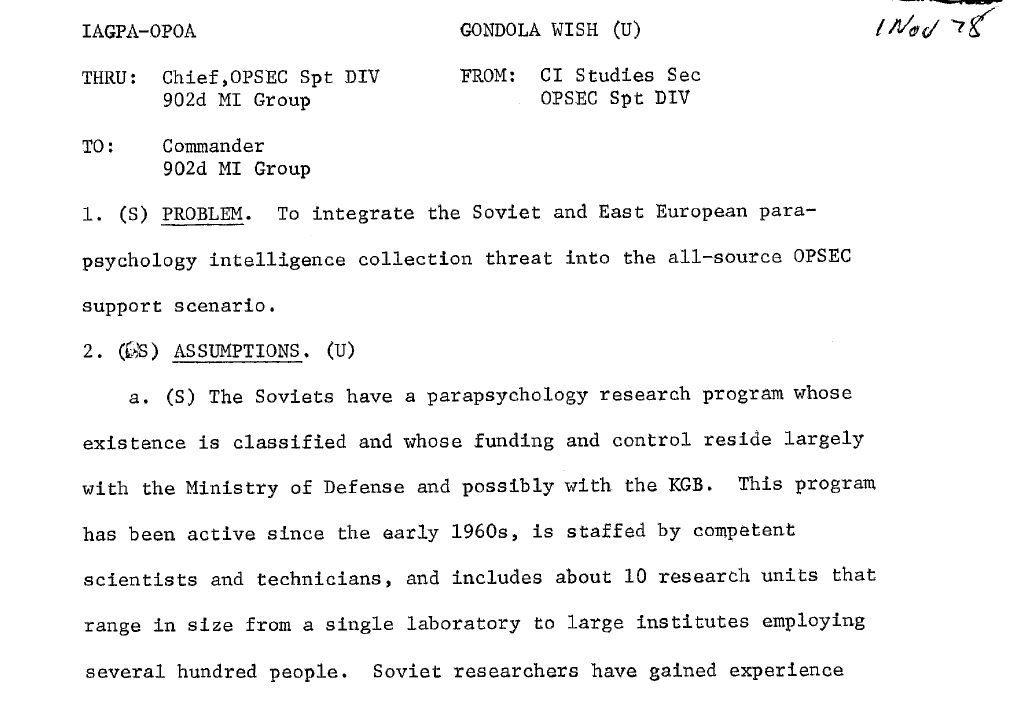
As a result of their programs, the the Soviets had “experience with a greater variety of research methods than have their US counterparts and have completed more of the critical experiments.” This led the report’s writer to conclude that, since the United States had successfully used these techniques for offensive intelligence collection, then the Soviet’s likely had as well...
https://www.muckrock.com/news/archives/2017/jan/25/cia-feared-widening-psychic-gap-soviets/
20161212
When Kissinger spied for Russia
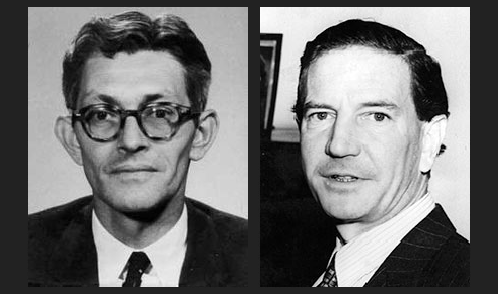
In the international intelligence community, (a loose term to cover spies, spy writers and spy groupies) there are two views on Kim Philby. One is that after he fled to Moscow he was a burnt-out case, a pathetic drunk living on the memory of his great triumph – fooling the West for thirty years. In this scenario, Philby drank to drown the thought of what might have been. If only he had not been so friendly with Guy Burgess, whose follies gave Philby away, he might have become director-general of the British Secret Intelligence Service, Sir Harold Philby, invulnerable to exposure and in a position to have handed the British and American services to Moscow on a plate.
The other view is that Philby’s greatest service to Communism came after he was forced to flee to Moscow, that just by being there he indirectly achieved victories in the intelligence war beyond the KGB’s wildest dreams. Supporters of the second view, and I am one, argue that Philby was instrumental in paralysing Western intelligence operations against the Soviet Union for ten years, that he ruined the careers of some of the CIA’s finest officers, that he neutralised a string of Soviet defectors, caused havoc in the British and French services, and generally undermined the whole conceptual basis of intelligence work.
Philby achieved this by tipping the spy-catcher for the Western world, the CIA officer James Jesus Angleton, into clinical madness. Philby had help, of course. Alcohol, Angleton’s own personality, the very nature of spy-catching, the power of bureaucracies, and the appalling inefficiency of the CIA’s system of checks and controls, all contributed to Angleton’s paranoia. But even Angleton would have had to admit that in Philby’s terrible personal treachery lies the key to understanding both what went wrong with Angleton and what went wrong with the CIA.
Angleton first met Philby in 1944 when Angleton was a raw counter-intelligence officer in OSS (Office of Strategic Services), a gung-ho outfit under the command of General ‘Wild Bill’ Donovan, who thought that the way to win the war was with clandestine groups operating behind enemy lines, a sort of American SOE. Philby was the glamorous, experienced SIS officer. The two worked in the same building in London, and although at that stage they were not close friends, contact had been made – they were on the same side and shared the same aim, the defeat of Fascism. So after the war, when Philby, rising steadily in SIS, was posted to Washington, one of the first Americans he looked up was James Angleton, who was still, like Philby, in the spy business. Philby, after a spell running SIS’s Soviet desk and a tour of field duty in Turkey, was the new SIS liaison officer with the CIA and the FBI, a job that put him at the heart of Western intelligence. Angleton was executive assistant to ADSO (the assistant director of Special Operations) and it was his job to look after Philby and the representatives of other friendly foreign intelligence services. The two men now became close. They lunched together regularly, dined at each other’s houses, met with their families for celebrations such as Thanksgiving. Mrs Angleton remembers them as genuine friends and when I spoke about Angleton to Philby in Moscow in 1988 he agreed that this was so. But all the time Philby was remorselessly using Angleton as his unwitting conduit to the secrets of the CIA. Angleton introduced Philby around, opened doors for him, vouched for him: ‘This is my friend Kim. We knew each other in London.’
When Burgess and Maclean fled to Moscow in May 1951 Philby came under suspicion by association. The reasoning was as follows: ‘Burgess is a Communist spy. He shared a house in Washington with Philby, the crack counter-intelligence officer. If Philby didn’t know, then he is a lousy counter-intelligence officer. If he did, then he is dirty too.’ Angleton would have none of this. He wrote a four-page memorandum to the CIA Director, General Walter Bedell Smith, defending Philby. Philby, Angleton said, had been duped by Burgess and knew nothing of Burgess’s work for the Soviets. He urged the Director to wait; his friend would soon be cleared. A year later, Angleton was still defending him. He told a US foreign service officer he met in Paris that Philby would one day be director-general of SIS.
It was not until 1963, when, with SIS and the CIA closing in on him, Philby fled to Moscow, that Angleton was forced to face the truth – Philby had betrayed him. His first reaction was to cover up. CIA regulations had required that after each official meeting with Philby in 1949-51 Angleton write up a record of what had been discussed. Angleton simply burned these records. But since he was now counter-intelligence chief of the CIA, he could not avoid a damage assessment on Philby. His 30-page report, according to CIA officers who read it, was poorly constructed and very uninformative – ‘an attempt to turn the spotlight away from Philby’. Yet to himself he was forced to admit that everything Philby had learnt about the CIA had come from the very officer whose job it was to protect that agency against this sort of penetration...
http://www.lrb.co.uk/v13/n13/phillip-knightley/when-kissinger-spied-for-russia
20140828
Snowden: The Deception Question
Epstein, Edward Jay. James Jesus Angleton: Was He Right?
The Deception Question
Even Angleton’s harshest critics at the CIA, such as William Colby, recognized that the KGB planted misleading clues in intelligence channels. But they believed, as Colby wrote in directives, that the CIA was able to weed out such tactical disinformation by considering it in the context of intelligence gathered by satellites, communications intercepts, and other sources. This view held that while it might be possible to temporarily confuse CIA field officers, disinformation would never be passed up the chain to the White House. Angleton’s view that it could be used to manipulate a President was peremptorily dismissed. Colby termed it “sick think.”
In 1995 , however , the CIA Inspector General found that in the 1980s and early 1990s the KGB had dispatched at least half-dozen double agents who provided disinformation cooked up in Moscow to their CIA case officers. It further discovered that this concoction of bogus and factually true information had routinely been passed between 1986 and 1994 to three Presidents– President Ronald Reagan, President George H.W. Bush and President Bill Clinton. The disinformation, according to the Inspector General, became part of one of the CIA's most highly classified products, with each report signed personally by the CIA director, provided with a distinctive blue stripe to signify their importance , and sent directly to the President, Secretary of Defense and Secretary of State. When the CIA Inspector General retrospectively traced out the path of this disinformation in the blue border reports, he found that the “senior CIA officers responsible for these reports had known that some of their sources were controlled by Russian intelligence.” These CIA officials apparently continued to forward the Russian disinformation to the White House because it would be too embarrassing for them to admit that they had been so badly deceived. Whatever their motive, the CIA officers who had been gulled by the KGB found a common interest with the KGB in not revealing on-going deception. The CIA Director John Deutch, who had received these blue border reports when he was deputy director of the Department of Defense, told Congress that the CIA’s failure to disclose that the intelligence was from KGB-controlled agents was "an inexcusable lapse in elementary intelligence practice."
So Angleton proved to be right about the KGB’s capabilities to penetrate, deceive, and use the CIA to deceive its own government.
By the time Angleton died, in 1987, the term Angletonian had become an adjective used to describe something conspiratorial, overly paranoid, or bizarre. Even though every Director of Central Intelligence from Allan Dulles to James Schlesinger kept Angleton as their key advisor on counterintelligence, his critics ridiculed his idea that KGB moles could infiltrate the FBI and CIA. In the media, the notion of moles was treated as evidence of his paranoia. Simply put, in 1987, Angleton's thesis that the KGB could use the CIA to deceive Presidents was viewed by almost every commentator on the subject as an excursion into paranoia...
The Deception Question
Even Angleton’s harshest critics at the CIA, such as William Colby, recognized that the KGB planted misleading clues in intelligence channels. But they believed, as Colby wrote in directives, that the CIA was able to weed out such tactical disinformation by considering it in the context of intelligence gathered by satellites, communications intercepts, and other sources. This view held that while it might be possible to temporarily confuse CIA field officers, disinformation would never be passed up the chain to the White House. Angleton’s view that it could be used to manipulate a President was peremptorily dismissed. Colby termed it “sick think.”
In 1995 , however , the CIA Inspector General found that in the 1980s and early 1990s the KGB had dispatched at least half-dozen double agents who provided disinformation cooked up in Moscow to their CIA case officers. It further discovered that this concoction of bogus and factually true information had routinely been passed between 1986 and 1994 to three Presidents– President Ronald Reagan, President George H.W. Bush and President Bill Clinton. The disinformation, according to the Inspector General, became part of one of the CIA's most highly classified products, with each report signed personally by the CIA director, provided with a distinctive blue stripe to signify their importance , and sent directly to the President, Secretary of Defense and Secretary of State. When the CIA Inspector General retrospectively traced out the path of this disinformation in the blue border reports, he found that the “senior CIA officers responsible for these reports had known that some of their sources were controlled by Russian intelligence.” These CIA officials apparently continued to forward the Russian disinformation to the White House because it would be too embarrassing for them to admit that they had been so badly deceived. Whatever their motive, the CIA officers who had been gulled by the KGB found a common interest with the KGB in not revealing on-going deception. The CIA Director John Deutch, who had received these blue border reports when he was deputy director of the Department of Defense, told Congress that the CIA’s failure to disclose that the intelligence was from KGB-controlled agents was "an inexcusable lapse in elementary intelligence practice."
So Angleton proved to be right about the KGB’s capabilities to penetrate, deceive, and use the CIA to deceive its own government.
By the time Angleton died, in 1987, the term Angletonian had become an adjective used to describe something conspiratorial, overly paranoid, or bizarre. Even though every Director of Central Intelligence from Allan Dulles to James Schlesinger kept Angleton as their key advisor on counterintelligence, his critics ridiculed his idea that KGB moles could infiltrate the FBI and CIA. In the media, the notion of moles was treated as evidence of his paranoia. Simply put, in 1987, Angleton's thesis that the KGB could use the CIA to deceive Presidents was viewed by almost every commentator on the subject as an excursion into paranoia...
20120421
Ex-CIA officer sheds light on 1977 spy arrests in Moscow « intelNews.org
A recently retired CIA officer has spoken publicly for the first time about the 1977 arrest and eventual suicide of a Soviet double agent considered one of the Central Intelligence Agency’s most important assets during the Cold War.
Aleksandr Dmitryevich Ogorodnik was an official in the Soviet diplomatic service who, while stationed at the Soviet embassy in Bogotá, Colombia, was compromised and later blackmailed by Colombian intelligence into spying on Moscow. Ogorodnik was initially handled by the Colombians, with little success. Later, however, when he was moved to a sensitive post in the Soviet Ministry of Foreign Affairs in Moscow, the Colombians turned him over to the CIA.
He was handled by CIA officerAldrich Ames —himself a double spy for the Soviet KGB— who gave Ogorodnik the codename TRIGON...
http://intelnews.org/2012/04/16/01-970/
http://en.wikipedia.org/wiki/Aleksandr_Dmitrievich_Ogorodnik
Aleksandr Dmitryevich Ogorodnik was an official in the Soviet diplomatic service who, while stationed at the Soviet embassy in Bogotá, Colombia, was compromised and later blackmailed by Colombian intelligence into spying on Moscow. Ogorodnik was initially handled by the Colombians, with little success. Later, however, when he was moved to a sensitive post in the Soviet Ministry of Foreign Affairs in Moscow, the Colombians turned him over to the CIA.
He was handled by CIA officerAldrich Ames —himself a double spy for the Soviet KGB— who gave Ogorodnik the codename TRIGON...
http://intelnews.org/2012/04/16/01-970/
http://en.wikipedia.org/wiki/Aleksandr_Dmitrievich_Ogorodnik

Subscribe to:
Posts (Atom)