Showing posts with label Covert Action. Show all posts

20161002

Ed Lansdale’s Black Warfare in 1950s Vietnam

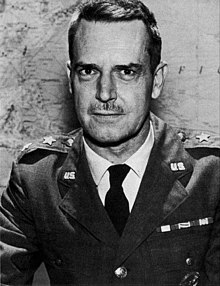
A bit miffed at his last-minute orders to proceed directly from the Philippines to Vietnam, with no time to return home to Washington to prepare for his new covert mission or visit his family, Colonel Edward Lansdale flew into Saigon in the rattling bucket seat of an amphibian aircraft from the 31st Air-Sea Rescue Squadron. It was the first available flight out of Clark Air Force Base to Saigon, and the crewmen agreed to take him if he didn’t mind the extra flight time while they performed their patrol over the South China Sea. It was June 1, 1954, and as he sipped coffee from a paper cup he thought about what lay ahead. He’d heard about the French defeat at Dien Bien Phu and knew that the French and Viet Minh were working out a peace settlement in Geneva, but beyond that, his knowledge about the country was slim.

It was at a meeting convened in the Pentagon six months earlier to discuss Vietnam that Secretary of State John Foster Dulles had turned to Lansdale and told him, “We’re going to send you over there,” to which Lansdale replied, “Not to help the French!” No, he was reassured, he would help the Vietnamese put down the Communist-dominated Viet Minh in Indochina. Allen Dulles, director of the Central Intelligence Agency, joined with his brother in backing Lansdale to serve as the founder and chief of the CIA’s Saigon Military Mission (SSM), which was to quietly enter Vietnam and help the pro-Western Vietnamese wage political-psychological warfare.

The CIA was willing to give Lansdale, a San Francisco advertising executive before World War II, great latitude based on his success in black operations in the Philippines from 1950-53. A U.S. Army officer who transferred his commission to the Air Force after the war, he had helped the Philippine army put down the Hukbalahap (Huk) rebellion. Philippine Communists formed the guerrilla group originally to fight the Japanese in World War II. After Huk efforts to participate in the postwar government were rebuffed and a reportedly fraudulent election took place in 1949, the Huks began their guerrilla war to overthrow the U.S.-backed government. In waging war against the Huks, Lansdale wielded a wide array of counterinsurgency and psywar tools, some playing upon Filipino superstitions. One such successful unconventional tactic exploited villagers’ belief in vampires, another on ghosts of dead Huks. In Lansdale’s “Eye of God” campaign, suspected guerrillas living in a village were targets of psywar teams that surreptitiously painted a menacing eye on a wall facing the suspect’s hut. Although most notorious for these types of psywar operations, it was primarily Lansdale’s application of advertising principles and media manipulation that led to the honest election of Ramon Magsaysay as president in 1953.

But Vietnam was a different country with much different problems...

http://www.historynet.com/ed-lansdales-black-warfare-in-1950s-vietnam.htm

20151214

The Curios Case Of The Stolen CIA Files

Who is trying to sabotage efforts to get to the bottom of human rights abuses in El Salvador — abuses that likely have a US connection?

A break-in targeting information about a lawsuit against the CIA is the latest in a string of apparently related thefts, data breaches and armed attacks against human rights workers who are investigating abuses committed during El Salvador’s bloody civil war in the 1980s.

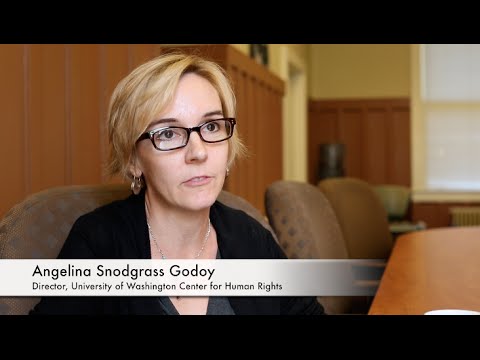
Most recently, an unknown party broke into the office of Angelina Godoy, director of the University of Washington’s Center for Human Rights(CHR), and stole her computer and hard drive. These contained sensitive information and testimony regarding the Center’s ongoing investigations into human rights violations in El Salvador.

The hard drive also contained information about a lawsuit against the CIA that the CHR filed a few weeks before the theft. The suit alleges that the CIA — citing national security reasons — illegally withheld documents from CHR regarding US involvement in the country’s 12-year civil war.

The lawsuit also requests documents regarding Col. Sigifredo Ochoa Perez, a Salvadoran commander trained by US forces at the School of the Americas. Perez, who was a member of the country’s parliament until retiring earlier this year, is accused of leading a notoriously brutal government brigade responsible for two massacres of unarmed civilians, in 1981 and 1982. He is currently under investigation by Salvadoran authorities for his role in those massacres.

There were no signs of forced entry into Godoy’s office, no other valuables were taken, and the thieves didn’t take anything from other offices near the break-in site. While the CHR and UW Police can’t rule out common crime, the timing is suspicious...

http://whowhatwhy.org/2015/12/09/the-curious-case-of-the-stolen-cia-files/