

20160619
A Saudi Imam, 2 Hijackers and Lingering 9/11 Mystery

WASHINGTON — Inside an opulent palace in Riyadh late one evening in February 2004, two American investigators interrogated a man they believed might hold answers to one of the lingering mysteries of the Sept. 11, 2001, attacks: What role, if any, did officials in Saudi Arabia’s government play in the plot?
The man under questioning, Fahad al-Thumairy, had been a Saudi consular official based in Los Angeles and the imam of a mosque visited by two of the hijackers. The investigators, staff members of the national 9/11 commission who had waited all day at the United States Embassy before being summoned to the late-night interview, believed that tying him to the plot could be a step toward proving Saudi government complicity in the attacks.
They were unsuccessful. In two interviews lasting four hours, Mr. Thumairy, a father of two then in his early 30s, denied any ties to the hijackers or their known associates. Presented with phone records that seemed to contradict his answers, he gave no ground, saying the records were wrong or people were trying to smear him. The investigators wrote a report to their bosses saying they believed Mr. Thumairy was probably lying, though no government investigation into the Sept. 11 attacks has ever found conclusive evidence that Mr. Thumairy — or any other Saudi official — assisted in the plot.
But nearly 15 years after the attacks on New York and Washington, the question of a Saudi connection has arisen again amid new calls for the release of a long-classified section of a 2002 congressional inquiry into the attacks that discusses a possible Saudi role in the terrorist plot — the so-called 28 pages, whose secrecy has made them almost mythical.
American officials who have read the 28 pages say that, of all the investigative leads in that section of the report, the unanswered questions about Mr. Thumairy and the two hijackers remain the most intriguing. If there was any Saudi government role whatsoever, some still believe, it most likely would have gone through Mr. Thumairy...
20160312
Wiki: Lee Herbert Hamilton
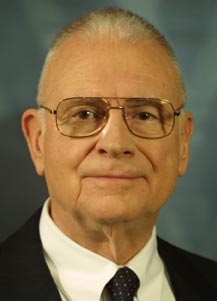
...As chairman of the House Select Committee to Investigate Covert Arms Transactions with Iran (1987), Hamilton chose not to investigate President Ronald Reagan or President George H. W. Bush, stating that he did not think it would be "good for the country" to put the public through another impeachment trial. Hamilton was later chair of the House October Surprise Task Force (1992)...
On March 15, 2006, Congress announced the formation of the Iraq Study Group, organized by the United States Institute of Peace, of which Hamilton is the Democratic co-chairman, along with the former Secretary of State (under President George H.W. Bush) James A. Baker III. Hamilton, like Baker, is considered a master negotiator.
Since leaving Congress, Mr. Hamilton has served as a member of the Hart-Rudman Commission, and was co-chairman of the Commission to Investigate Certain Security Issues at Los Alamos. He sits on many advisory boards, including those to the CIA, the President's Homeland Security Advisory Council, and the United States Army. Hamilton is an Advisory Board member and Co-Chair for the Partnership for a Secure America, a not-for-profit organization dedicated to recreating the bipartisan center in American national security and foreign policy. He is previously the president and director of the Woodrow Wilson International Center for Scholars, and was appointed to serve as the vice chair of the 9/11 Commission. In 2000-2001, he served as the American member of the International Commission on Intervention and State Sovereignty, which prepared the U.N policy of Responsibility to Protect, adopted in 2005. He is also a member of the Board of Advisors of Albright Stonebridge Group....
https://en.wikipedia.org/wiki/Lee_H._Hamilton
20151007
How to Spy the 9/11 Lie

The authors make clear that there are two important guidelines to employ when analyzing these verbal and visual clues. First, timing is important. Due to the fact that people think ten times faster than they speak, the behaviors are more important when the first one occurs within five seconds of the question. Secondly, when the behavioral clues occur in groups of two or more, called clusters, they are more indicative of deception on the part of the person being questioned. The more clues exhibited, the more clear the deception becomes.
Let’s take a look at some examples.
In a December 15, 2001 press conference, President George W. Bush was asked an unexpected question about 9/11. In a remarkably delayed response, Bush exhibited both a verbal clue for deception, the failure to answer, and a visual clue called an anchor-point movement. The latter is when the anxiety raised by the question causes the person questioned to shift his body to relieve physical instability. As Bush replied, he shook his head, moved his hands, and seemed to be shuffling his feet uncomfortably.
Reporter: Do you agree or disagree with the RNC that [a question of your advanced knowledge of 9/11] borders on political hate speech?
Bush: Uh, yeah, there’s time for politics and, uh, you know… time for politics and, uh… I, uh, it’s an absurd insinuation.”
If the reporter had been a CIA interrogator, like any of the three authors of the book, this response would have raised an immediate red flag that the issue needed further examination...
http://www.washingtonsblog.com/2015/10/how-to-spy-the-911-lie.html
20141001
20140722
Commission releases updated list of post 9/11 concerns
A decade later, the members have reconvened as private citizens to reflect upon the changes of the past 10 years and the emerging threats the U.S. faces as a country. In recent months, they have spoken with some of the country's most senior national security leaders -- current and recently retired. What the former commissioners, now working as the Bi-Partisan Policy Center, found: "counterterrorism fatigue and a waning sense of urgency among the public threaten U.S. security."
According to their report, "many Americans think that the terrorist threat is diminishing -- that, as a country, we can begin turning back to other concerns. They are wrong..."
http://www.wtop.com/215/3667024/10-years-after-911-Commission-report
20140317
The 9/11 Joint Congressional Inquiry and 28 Missing Pages
The leaders of the 9/11 Joint Congressional Inquiry were Congressman Porter Goss and Senator Bob Graham, who headed-up the House and Senate intelligence committees at the time. Due to Goss and Graham’s activities before 9/11 and on that day, as well as their representation of the state of Florida, their leadership of the Inquiry presented a remarkable number of questions.
For example, Goss and Graham were meeting with Pakistani ISI General Mahmud Ahmedjust as the first plane struck the World Trade Center. The Ahmed meeting is interesting due to the Pakistani ISI’s history with the CIA in arming the “Afghan Arabs” from which al Qaeda evolved. The ISI had also been intimately linked with the terrorist network previously run by the CIA’s partner—the Bank of Credit and Commerce International (BCCI). Added to these coincidences was the fact that Goss and Graham had just returned from a trip to Pakistan in which they had specifically discussed Osama bin Laden, who was a topic of discussion at their 9/11 breakfast meeting as well.
It seems to be an unusual coincidence that the leader of the Pakistani ISI would be present as al Qaeda’s historic attack was taking place. Ahmed’s meeting with Goss and Graham is also notable in light of Goss’ history as a veteran CIA operative, a member of a secret assassination squad, and someone who was trained to recruit and run foreign operatives. It is also remarkable that Goss’ home district was the primary base for several of the alleged 9/11 hijackers...
http://digwithin.net/2014/03/16/28-missing-pages/
20140105
THE ATTACKS OF 9/11 - Treason is the reason for the 28 missing pages.

http://en.wikipedia.org/wiki/George_Bush_Center_for_Intelligence#cite_note-cia_vt-1
"My dad told me before I make up my mind, go and talk to Bandar. One, he's our friend. Our means America, not just the Bush family. Number two, he knows everyone around the world who counts. And number three, he will give you his view on what he sees happening in the world."
"There are people who are your enemies in this country," Bush said, "who also think my dad is your friend."
"So?" asked Bandar, not asking who, though the reference was obviously to supporters of Israel, among others.
Bush said in so many words that the people who didn't want his dad to win in 1992 would also be against him if he ran. They were the same people who didn't like Bandar...
http://911blogger.com/news/2013-12-27/attacks-911-treason-reason-28-missing-pages
20130407
Sibel Edmonds

Sibel Deniz Edmonds (born 1970)[1] is an Iranian-American[2] former FBI translator and founder of the National Security Whistleblowers Coalition (NSWBC). Edmonds gained public attention following her firing from her position as a language specialist at the FBI's Washington Field Office in March 2002, after she accused a colleague of covering up illicit activity involving foreign nationals, alleging serious acts of security breaches, cover-ups, and intentional blocking of intelligence which, she contended, presented a danger to the United States' security. Her later claims have gained her awards and fame as a whistleblower.[3]
In March 2012, she published a memoir, titled Classified Woman-The Sibel Edmonds Story.[4]
Edmonds testified before the 9/11 Commission, but her testimony was excluded from the official 567 page 9/11 Commission Report.[5]...
https://en.wikipedia.org/wiki/Sibel_Edmonds
http://www.justacitizen.com
http://www.boilingfrogspost.com
20111119
Former 9/11 commission director talks at lecture
As the crowd of students, professors and Houstonians brushed off the cold, Philip Zelikow stepped to the podium in The Honors College Commons on Thursday to discuss the US government’s defense against terrorism.
Zelikow, the executive director of the 9/11 Commission, an executive on the President Intelligence Advisory Board and a history professor at the University of Virginia, focused his lecture, “The Twilight of War,” on America’s resiliency and his experience with the horrific events of 9/11.
“It’s my job to make meaning of 9/11,” Zelikow said.
20111101
The 9/11 Commission claims that “we found no evidence”
When Underwriters Laboratories fired me for challenging the World Trade Center (WTC) report that it helped create with the National Institute of Standards and Technology (NIST), it said “there is no evidence” that any firm performed the required fire resistance testing of the materials used to build the Twin Towers. Of course, that was a lie.
With this experience in mind, I checked to see how many times the 9/11 Commission Report used the phrase “no evidence,” and noted in particular the times the Commission claimed to have “found no evidence” or that “no evidence was uncovered.” I discovered that the phrase “no evidence” appears an amazing 63 times. An example is the dubious statement — “There is no evidence to indicate that the FAA recognized Flight 77 as a hijacking until it crashed into the Pentagon (p 455).”
20110910
Exclusive: National Archives sits on 9/11 Commission records
(Reuters) - Ten years after al Qaeda's attack on the United States, the vast majority of the 9/11 Commission's investigative records remain sealed at the National Archives in Washington, even though the commission had directed the archives to make most of the material public in 2009, Reuters has learned.
The National Archives' failure to release the material presents a hurdle for historians and others seeking to plumb one of the most dramatic events in modern American history.
