Showing posts with label science. Show all posts

20161121

'Conductive concrete' shields electronics from EMP attack

An attack via a burst of electromagnetic energy could cripple vital electronic systems, threatening national security and critical infrastructure, such as power grids and data centers.

Nebraska engineers Christopher Tuan and Lim Nguyen have developed a cost-effective concrete that shields against intense pulses of electromagnetic energy, or EMP. Electronics inside structures built or coated with their shielding concrete are protected from EMP.

The technology is ready for commercialization, and the University of Nebraska-Lincoln has signed an agreement to license this shielding technology to American Business Continuity Group LLC, a developer of disaster-resistant structures.

Electromagnetic energy is everywhere. It travels in waves and spans a wide spectrum, from sunlight, radio waves and microwaves to X-rays and gamma rays. But a burst of electromagnetic waves caused by a high-altitude nuclear explosion or an EMP device could induce electric current and voltage surges that cause widespread electronic failures.

"EMP is very lethal to electronic equipment," said Tuan, professor of civil engineering. "We found a key ingredient that dissipates wave energy. This technology offers a lot of advantages so the construction industry is very interested."

EMP-shielding concrete stemmed from Tuan and Nguyen's partnership to study concrete that conducts electricity. They first developed their patented conductive concrete to melt snow and ice from surfaces, such as roadways and bridges. They also recognized and confirmed it has another important property - the ability to block electromagnetic energy.

http://phys.org/news/2016-11-concrete-shields-electronics-emp.html

20160523

Atmospheric aerosols can significantly cool down climate


It is possible to significantly slow down and even temporarily stop the progression of global warming by increasing the atmospheric aerosol concentration, shows a new study from the University of Eastern Finland. However, climate engineering does not remove the need to reduce greenhouse gas emissions.

The study used global climate models to analyse the ability of atmospheric aerosols to cool down the climate, as well as the consequences of their use. The study focused on methods of climate engineering, which intentionally and artificially increase the atmospheric aerosol concentration in order to cool down the climate.

Furthermore, the cooling effects of current atmospheric aerosol emissions were analysed. The study found that aerosol particles injected into the stratosphere proved extremely efficient in cooling down the climate. The method mimics massive volcanic eruptions which release aerosol particles into the stratosphere that reflect solar radiation back into space, thus cooling down the climate even up to years. Atmospheric aerosols injected into the troposphere, on the other hand, can effectively impact the climate through cloud formation. Atmospheric aerosols increase the number of cloud droplets in clouds and make them whiter, which means that they can more effectively reflect solar radiation back into space.

The study also showed that current traffic and industry induced aerosol emissions cool down the climate. However, their cooling effect on the global temperature is significantly smaller than the warming effect of current greenhouse gas emissions. Nevertheless, it would be possible to harness, for example, global airline traffic and ship traffic for the purposes of atmospheric temperature regulation by increasing the sulphuric concentrations of fuels. This would make it possible to significantly increase stratospheric aerosol concentrations and cloud reflectivity in open sea. However, sulphuric concentrations of fuels would have to be increased beyond the levels defined in international agreements. In addition, the cooling effect would mainly be targeted at the northern hemisphere, which is responsible for a far greater share of global traffic than the southern hemisphere...

https://www.sciencedaily.com/releases/2016/05/160519120731.htm

20160315

Nikola Tesla and Tunguska


On June 30, 1908, over 100 years ago, a huge explosion destroyed over 1,000 miles of a very remote and sparsely inhabited region of central Siberia.

The exact date of the event is very uncertain because nobody from the outside reached the region until 1927, and there is an 11 day difference between the Julian calendar then used by the Russians, and the Gregorian calendar which supplanted the Julian calendar.

In 1582, Pope Gregory XIII massacred the calendar by taking out 11 days in the month of October. The Russians did not convert to the Gregorian calendar until after the 1917 Russian Revolution.

About June 30,1908, a huge explosion completely devastated a 2,600 square kilometer area of Siberia.

This explosion was 1,000 times more powerful than the Hiroshima atomic bomb, and larger than the devastation caused by subsequent nuclear bomb testing by the U.S. and Russia.

Because of the remote location, the Russian Revolution, and Civil War, an expedition did not reach Tunguska until 1927. Initial reports said that it was a meteorite because a celestial phenomenon like the northern lights or aurora borealis could be seen as far south as London.

This explosion was not a meteorite or visitors from outer space....It was the work of the super Serbian scientist named Nikola Tesla...

http://www.reformation.org/tesla-and-tunguska.html

Magnetic mind control works in live animals, makes mice happy

For a bunch of mind-controlled mice, walking into a magnetic field has never felt sooo good.

The imperceptible force that the genetically tweaked rodents wandered through fired up the reward-related circuits in their brains, likely conjuring the pure pleasure experienced when, for instance, they ate a yummy treat, researchers report Monday in Nature Neuroscience. Of course, this meant that the mice didn’t want to leave that happy magnetic field.

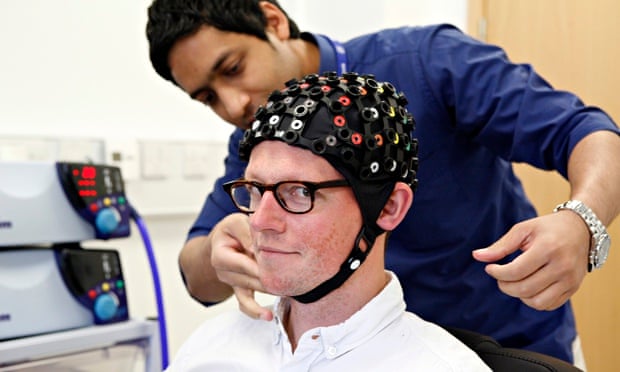
While getting mice to congregate in specific, magnetized areas may be useful for pest control, the experiment demonstrates a much more powerful point: that researchers can remotely control specific brain circuits in living animals with just magnets. The finding paves the way for magnetic mind control to help study the functions and malfunctions of the brain—plus the use of ‘magneto-genetic’ therapies to treat brain disorders, the authors report.

“This is, to our knowledge, the first demonstration of bona fide magnetic control of the nervous system,” the authors, led by biomedical scientist Ali Güler at the University of Virginia, concluded.

Of course, over the years, scientists have come up with other ways to control specific circuitry in brains, including using light signals (optogenetics) and drugs (chemogenetics). But those methods have some notable drawbacks. Light signals, for instance, have trouble beaming deep into brain tissues, dimming their usefulness in some brain regions. Drugs, on the other hand, can reach deep, but they can take their time seeping in and out. This makes controlling brain processes in real, physiological time tricky...

http://arstechnica.com/science/2016/03/magnetic-mind-control-works-in-live-animals-makes-mice-happy/

20140824

Scientists Propose Using Lasers to Fight Global Warming From Space

At the world's first major geoengineering conference, two separate scientists put forward proposals to use lasers to modify the Earth's climate and fight global warming, from space.

One suggested that a satellite equipped with a high-powered laser could grow clouds in the atmosphere below; the other proposed lasers that would blast greenhouse gases from orbit to effectively erase the agents of climate change.

The highly theoretical proposals are still in their early stages, and easily count as the more radically ambitious of the already radically ambitious climate engineering schemes discussed by scientists. These plans don't concern gadgets that absorb carbon pollution or spreading particles in the sky, after all—we're talking about space lasers powerful enough to alter the climate.

And European Space Agency fellow Isabelle Dicaire studies them full time. She traveled to Berlin this week to discuss how a satellite equipped with high-powered LIDAR lasers may prove useful for researching—and maybe eventually actually orchestrating—climate engineering.

LIDAR is remote sensing technology that blasts a laser at a target, then analyzes its reflection to accurately measure distances. It's already widely used here on Earth (on things such as Google's driverless car), and by NASA's CALIPSO satellite. Dicaire is interested in what we could do with a much more powerful LIDAR positioned in space; theoretically, it should be able to better detect the movement of particles in clouds, and maybe even make new ones.venient if we could just zap them away with a laser. So why haven't we done it already, if plasma ionization has proven to scatter the building blocks of our climate crisis?...

20140418

U.S. Views of Technology and the Future: Science in the next 50 years

The American public anticipates that the coming half-century will be a period of profound scientific change, as inventions that were once confined to the realm of science fiction come into common usage. This is among the main findings of a new national survey by The Pew Research Center, which asked Americans about a wide range of potential scientific developments—from near-term advances like robotics and bioengineering, to more “futuristic” possibilities like teleportation or space colonization. In addition to asking them for their predictions about the long-term future of scientific advancement, we also asked them to share their own feelings and attitudes toward some new developments that might become common features of American life in the relatively near future.

Overall, most Americans anticipate that the technological developments of the coming half-century will have a net positive impact on society. Some 59% are optimistic that coming technological and scientific changes will make life in the future better, while 30% think these changes will lead to a future in which people are worse off than they are today.

Many Americans pair their long-term optimism with high expectations for the inventions of the next half century. Fully eight in ten (81%) expect that within the next 50 years people needing new organs will have them custom grown in a lab, and half (51%) expect that computers will be able to create art that is indistinguishable from that produced by humans. On the other hand, the public does see limits to what science can attain in the next 50 years. Fewer than half of Americans—39%—expect that scientists will have developed the technology to teleport objects, and one in three (33%) expect that humans will have colonized planets other than Earth. Certain terrestrial challenges are viewed as even more daunting, as just 19% of Americans expect that humans will be able to control the weather in the foreseeable future.

But at the same time that many expect science to produce great breakthroughs in the coming decades, there are widespread concerns about some controversial technological developments that might occur on a shorter time horizon...

http://www.pewinternet.org/2014/04/17/us-views-of-technology-and-the-future/

20130611

Wiki: Genetic engineering

Genetic engineering, also called genetic modification, is the direct manipulation of an organism's genome using biotechnology. (Indirect genetic modification through artificial selection has been practiced for centuries.) New DNA may be inserted in the host genome by first isolating and copying the genetic material of interest using molecular cloning methods to generate a DNA sequence, or by synthesizing the DNA, and then inserting this construct into the host organism. Genes may be removed, or "knocked out", using a nuclease. Gene targeting is a different technique that uses homologous recombination to change an endogenous gene, and can be used to delete a gene, remove exons, add a gene, or introduce point mutations.

An organism that is generated through genetic engineering is considered to be a genetically modified organism (GMO). The first GMOs were bacteria in 1973; GM mice were generated in 1974. Insulin-producing bacteria were commercialized in 1982 and genetically modified food has been sold since 1994. Glofish, the first GMO designed as a pet, was first sold in the United States December in 2003.[1]

Genetic engineering techniques have been applied in numerous fields including research, agriculture, industrial biotechnology, and medicine. Enzymes used in laundry detergent and medicines such as insulin and human growth hormone are now manufactured in GM cells, experimental GM cell lines and GM animals such as mice or zebrafish are being used for research purposes, and genetically modified cropshave been commercialized...

http://en.wikipedia.org/wiki/Genetically_modified

20120421

Physicists Create First Long-Distance Quantum Link | Wired.com

For more than a decade, physicists have been developing quantum mechanical methods to pass secret messages without fear that they could be intercepted. But they still haven’t created a true quantum network — the fully quantum-mechanical analog to an ordinary telecommunications network in which an uncrackable connection can be forged between any two stations or “nodes” in a network. Now, a team of researchers in Germany has built the first true quantum link using two widely separate atoms. A complete network could be constructed by combining many such links, the researchers say.

“These results are a remarkable achievement”, says Andrew Shields, applied physicist and assistant managing director at Toshiba Research Europe Ltd. in Cambridge, U.K., who was not involved in the work. “In the past we have built networks that can communicate quantum information, but convert it into classical form at the network switching points. [The researchers] report preliminary experiments towards forming a network in which the information remains in quantum form.”

Quantum communications schemes generally take advantage of the fact that, according to quantum theory, it’s impossible to measure the condition or “state” of a quantum particle without disturbing the particle. For example, suppose Alice wants to send Bob a secret message. She can do the encrypting in a traditional way, by writing out the message in the form of a long binary number and zippering it together in a certain mathematical way with a “key,” another long stream of random 0s and 1s. Bob can then use the same key to unscramble the message...

http://www.wired.com/wiredscience/2012/04/quantum-long-distance-link/