

20160412
Wiki: Donald Ewen Cameron
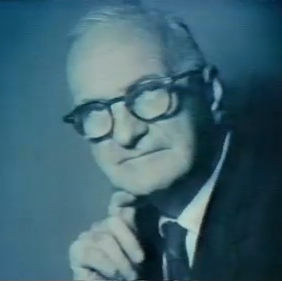
...Cameron started to distinguish populations between "the weak" and "the strong". Those with anxieties or insecurities and who had trouble with the state of the world were labeled as "the weak"; in Cameron's analysis, they could not cope with life and had to be isolated from society by "the strong". The mentally ill were thus labeled as not only sick, but also weak. Cameron further argued that "the weak" must not influence children. He promoted a philosophy where chaos could be prevented by removing the weak from society.[citation needed]...
Project MKUltra[edit source | edit]
During the 1950s and 1960s, Cameron became involved in what has later become known as the MKUltra mind control program, which was covertly sponsored by the Central Intelligence Agency (CIA)[2] and which eventually led to the publication of the KUBARK Counterintelligence Interrogation manual. He is unrelated to another CIA psychiatrist, Alan S. Cameron, who helped pioneer psychological profiling of world leaders during the 1970s and was not associated with the behavioral modification research program.[18]
Cameron had been hoping to correct schizophrenia by erasing existing memories and reprogramming the psyche. He commuted from Albany to Montreal every week to work at McGill's Allan Memorial Institute and was paid $69,000 from 1957 to 1964 to carry out MKUltra experiments there. In addition to LSD, he experimented with various paralytic drugs and electroconvulsive therapy at thirty to forty times the normal power.[19] His "driving" experiments consisted of putting a subject into a drug-induced coma for weeks at a time (up to three months in one case) while playing tape loops of noise or simple statements. These experiments were typically carried out on patients who had entered the institute for minor problems such as anxiety disorders and postpartum depression; many suffered permanent debilitation after these treatments.[20] Such consequences included incontinence, amnesia, forgetting how to talk, forgetting their parents, and thinking their interrogators were their parents.[21]His work was inspired and paralleled by the British psychiatrist William Sargant, who was also involved with the Intelligence Services and experimented extensively on his patients without their consent, causing similar long-term damage.[22]
Naomi Klein states in her book The Shock Doctrine that Cameron's research and his contribution to MKUltra were not about mind control and brainwashing, but "to design a scientifically based system for extracting information from 'resistant sources.' In other words, torture."[23] She then cites Alfred W. McCoy: "Stripped of its bizarre excesses, Cameron's experiments, building upon Donald O. Hebb's earlier breakthrough, laid the scientific foundation for the CIA's two-stage psychological torture method."[24]...
MKULTRA Subproject 68[edit source | edit]
MKULTRA Subproject 68 was one of Cameron's ongoing "attempts to establish lasting effects in a patient's behaviour" using a combination of particularly intensive electroshock, intensive repetition of prearranged verbal signals, partial sensory isolation, and repression of the driving period carried out by inducing continuous sleep for seven to ten days at the end of the treatment period. During research on sensory deprivation, Cameron used curare to immobilise his patients. After one test he noted: "Although the patient was prepared by both prolonged sensory isolation (35 days) and by repeated depatterning, and although she received 101 days of positive driving, no favourable results were obtained." Patients were regularly treated with hallucinogenic drugs, long periods in the "sleep room", and testing in the Radio Telemetry Laboratory, which was built under Cameron's direction. Here, patients were exposed to a range of RF and electromagnetic signals and monitored for changes in behaviour. It was later stated by staff members who had worked at the Institute during this time that not one patient sent to the Radio Telemetry Lab showed any signs of improvement afterwards...
https://en.wikipedia.org/wiki/Donald_Ewen_Cameron
20111203
Beyond brain scanning: Simultaneous high-resolution 3D neural imaging and photostimulation
(Medical Xpress) -- Neuroanatomy and neurophysiology are inherently three-dimensional domains. Neuronal cell body projections – axons and dendrites – can interconnect large numbers of neurons distributed over large cortical distances. Since the brain processes sensory, somatic, conceptual, and other classes of information in this 3D structural space, the need to (1) image neural structures and (2) stimulate and record neural signals are essential to understanding the relationship between brain structure and function. While 3D imaging and 3D photostimulation using scanning or parallel excitation methods have been used, they have not previously been combined into an optical system that can successfully decouple the corresponding optical planes when using a single lens – a shortcoming that has limited investigators to small neural areas. Recently, however, scientists at Université Paris Descartes have combined digital single photon holographic stimulation with remote-focusing-based epifluorescent functional imaging to overcome these limitations.
Researchers Francesca Anselmi and Cathie Ventalon in the Emiliani Wavefront-Engineering Microscopy Group led by Dr. Valentina Emiliani, along with Aurélien Bègue and David Ogden, work at the intersection of physics and biology. As such, they encountered several challenges in designing and performing their experimental demonstration.
