Showing posts with label Federal Reserve. Show all posts

20160828

Rothschild Net Worth: Billionaire Family Dumps US Dollar For Gold


The Rothschild family recently said that they are shifting from the U.S. Dollar, which is considered the global reserve currency, into gold and “other currencies.”

The Rothschild family is currently being headed by Lord Jacob Rothschild.

The decision to move to gold was addressed by Lord Jacob Rothschild in a statement. “Our significant U.S. Dollar position has now been somewhat reduced as, following the Dollar’s rise, we saw interesting opportunities in other currencies as well as gold, the latter reflecting our concerns about monetary policy and ever declining real yields,” the report said.

Lord Jacob Rothschild: The world is in ‘uncharted waters’

As reported by the Dollar Vigilante, by 19th century, it came to light that the Rothschild family held around half of the world’s wealth. The Rothschild family has said that they will be limiting stock market and currency exposure, and will up their gold holdings. Lord Jacob Rothschild warned that the world is in “uncharted waters,” with consequences being “impossible” to foresee.

Like us on Facebook
Also read: ‘Miss Universe’ 2016 Update – PH President Duterte Considers Pageant A Waste Of Money?

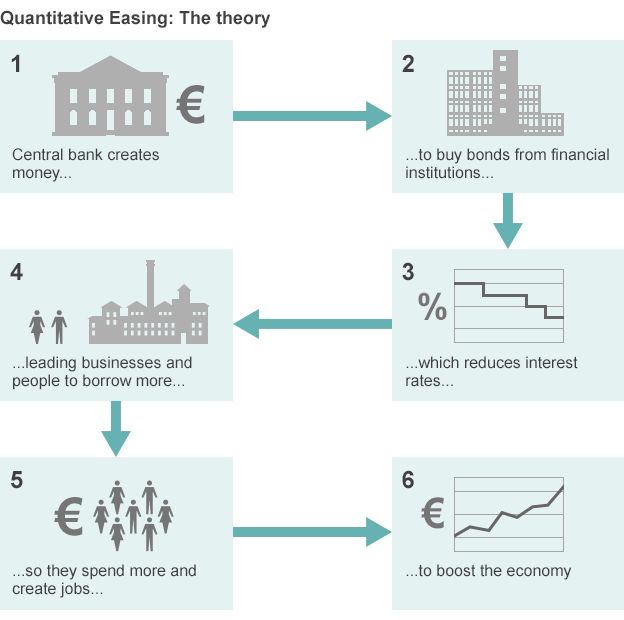
“It is impossible to predict the unintended consequences of very low interest rates, with some 30% of global government debt at negative yields, combined with quantitative easing on a massive scale,” Lord Jacob Rothschild said...

http://www.morningnewsusa.com/rothschild-net-worth-billionaire-family-dumps-us-dollar-gold-2399454.html

20160706

Alphabet Puts Former Federal Reserve Member on its Board

Alphabet Inc. added former Federal Reserve member Roger Ferguson to its board, the latest Wall Street-friendly move by the internet giant.

Ferguson was appointed as a director June 24 and will join Alphabet’s audit committee, helping oversee accounting and finance, the company said Wednesday in a statement.

Ferguson was vice chairman of the Board of Governors of the Federal Reserve from 1999 to 2006 and a voting member of the Federal Open Market Committee, which sets interest rates in the U.S. He has been chief executive officer of financial services company TIAA since 2008. He has served on the boards of several companies, including General Mills Inc. and hedge fund giant Brevan Howard Asset Management LLP.

Ferguson’s appointment is the latest example of Alphabet taking a more investor-focused approach. The company hired former Morgan Stanley executive Ruth Porat as chief financial officer last year. It also started buying back shares, controlling costs more and communicating more with analysts. Before 2015, the technology company mostly shunned Wall Street...

http://www.bloomberg.com/news/articles/2016-06-29/alphabet-puts-former-federal-reserve-member-on-its-board

20160320

Security Researcher Goes Missing After Investigating Bangladesh Bank Cyber-Heist

Tanvir Hassan Zoha, 34, security researcher, has gone missing just days after accusing Bangladesh's central bank officials of negligence, which facilitated the theft of over $81 million from the country's oversea accounts.

On February 5, 2016, hackers accessed the accounts of Bangladesh's central bank at the US Federal Reserve Bank in New York and tried to steal $1 billion dollars. Their attempt to transfer the money was thwarted by a simple typo, but not before managing to take $81 million.

In the investigation that followed, security researchers blamed malware and a faulty printer but at the same time said that the Bangladesh central bank officials were also to blame because of weak security procedures. The bank's governor and two deputy governors had to quit their jobs after the scandal...

20160221

Wiki: Bank for International Settlements


The Bank for International Settlements (BIS; French: Banque des règlements internationaux, BRI) is an international company limited by shares owned by central banks which "fosters international monetary and financial cooperation and serves as a bank for central banks".[2] The BIS carries out its work through subcommittees, the secretariats it hosts and through an annual general meeting of all member banks. It also provides banking services, but only to central banks and other international organizations. It is based in Basel, Switzerland, with representative offices in Hong Kong and Mexico City...

...The BIS was established on May 17, 1930, by an intergovernmental agreement by Germany, Belgium, France, the United Kingdom, Italy, Japan, the United States and Switzerland.[3][4]

The BIS was originally intended to facilitate reparations imposed on Germany by the Treaty of Versailles after World War I.[5] The need to establish a dedicated institution for this purpose was suggested in 1929 by the Young Committee, and was agreed to in August of that year at a conference at The Hague. A charter for the bank was drafted at the International Bankers Conference at Baden-Baden in November, and its charter was adopted at a second Hague Conference on January 20, 1930. According to the charter, shares in the bank could be held by individuals and non-governmental entities. The BIS was constituted as having corporate existence in Switzerland on the basis of an agreement with Switzerland acting as headquarters state for the bank. It also enjoyed immunity in all the contracting states.

The evidence had been mounting throughout the war that the BIS had helped the Germans loot assets from occupied countries, including gold rings and other items from labor and prison camp victims.[6] The most notorious incident was the Bank of England's transfer to the BIS gold looted by the Nazis after their invasion of Czechoslovakia in 1939.'[7] The fact that top level German industrialists and advisors sat on the BIS board is ample evidence to understand how the BIS was used by Hitler throughout the war, with the help of American, British and French banks. Between 1933 and 1945 the BIS board of directors included Walther Funk, a prominent Nazi official, and Emil Puhl, as well as Hermann Schmitz, the director of IG Farben and Baron von Schroeder, the owner of the J.H. Stein Bank....

Members

The number of countries represented in each continent are: 35 in Europe, 13 in Asia, 5 in South America, 3 in North America, 2 in Oceania, and 2 in Africa. Sixty member central banks or monetary authorities of these countries...

https://en.wikipedia.org/wiki/Bank_for_International_Settlements


20160214

What's holding back the world economy?

QE and low interest rates have disproportionately created wealth in the financial sector and inflated asset bubbles. It has done little for the real economy. The rules of the market need to be rewritten
Seven years after the global financial crisis erupted in 2008, the world economy continued to stumble in 2015. According to the United Nations’ report World Economic Situation and Prospects 2016, the average growth rate in developed economies has declined by more than 54% since the crisis. An estimated 44 million people are unemployed in developed countries, about 12 million more than in 2007, while inflation has reached its lowest level since the crisis.

More worryingly, advanced countries’ growth rates have also become more volatile. This is surprising, because, as developed economies with fully open capital accounts, they should have benefited from the free flow of capital and international risk sharing – and thus experienced little macroeconomic volatility. Furthermore, social transfers, including unemployment benefits, should have allowed households to stabilise their consumption.

But the dominant policies during the post-crisis period – fiscal retrenchment and quantitative easing (QE) by major central banks – have offered little support to stimulate household consumption, investment, and growth. On the contrary, they have tended to make matters worse.

In the US, quantitative easing did not boost consumption and investment partly because most of the additional liquidity returned to central banks’ coffers in the form of excess reserves. The Financial Services Regulatory Relief Act of 2006, which authorised the Federal Reserve to pay interest on required and excess reserves, thus undermined the key objective of QE...

20150321

Where Is Germany's Gold?

Peter Boehringer hates the word “conspiracy.” It implies something crazy, and if you spend even a little time with the 45-year-old German, it becomes clear he’s driven by a desire for order. On a recent morning in Munich, he’s dressed in a cobalt blue shirt that matches his blue tie and blue eyes. His black hair is cropped close above his receded hairline. In his gray Volkswagen minivan, the cup holder contains two identical water bottles, each filled to the same level. At the end of a daylong interview, for which Boehringer has arranged an hour-by-hour itinerary, he sends a follow-up e-mail with a numbered summation of points he’s made. No. 2 says that the crusade he’s been waging for the last three years is simply about transparency. “Questions,” he writes, “by definition cannot be ‘conspiracy theories.’ ”

Boehringer is a gold bug, a member of the impassioned tribe of investors and academics who distrust central banks and paper money, unless the governments that print it will exchange the cash for gold or silver from their vaults. He has an asset management firm that invests his own money and that of clients in gold, silver, and mining stocks, and he’s a founder of the nonprofit German Precious Metal Society, which educates the public about “the craziness of unbacked monetary systems,” he says. In short, Boehringer is worried that the global economy is built on a fiction of currencies that aren’t backed by precious metals. Which is why he set out to make sure the gold that Germany and other nations say they have actually exists.

Almost half of Germany’s gold resides at 33 Liberty St., the headquarters of the Federal Reserve Bank of New York, 80 feet below street level in a vault that sits on Manhattan’s bedrock. In 2012, Boehringer started a campaign on his blog to bring it home. He argued the gold should be shipped to the German central bank in Frankfurt. The hoard, amassed during Germany’s postwar boom, had never been subject to a published bar-by-bar physical review by its owners...

http://www.bloomberg.com/news/features/2015-02-05/germany-s-gold-repatriation-activist-peter-boehringer-gets-results

20131112

Andrew Huszar: Confessions of a Quantitative Easer


I can only say: I'm sorry, America. As a former Federal Reserve official, I was responsible for executing the centerpiece program of the Fed's first plunge into the bond-buying experiment known as quantitative easing. The central bank continues to spin QE as a tool for helping Main Street. But I've come to recognize the program for what it really is: the greatest backdoor Wall Street bailout of all time.

Five years ago this month, on Black Friday, the Fed launched an unprecedented shopping spree. By that point in the financial crisis, Congress had already passed legislation, the Troubled Asset Relief Program, to halt the U.S. banking system's free fall. Beyond Wall Street, though, the economic pain was still soaring. In the last three months of 2008 alone, almost two million Americans would lose their jobs.

The Fed said it wanted to help—through a new program of massive bond purchases. There were secondary goals, but Chairman Ben Bernanke made clear that the Fed's central motivation was to "affect credit conditions for households and businesses": to drive down the cost of credit so that more Americans hurting from the tanking economy could use it to weather the downturn. For this reason, he originally called the initiative "credit easing..."

http://online.wsj.com/news/articles/SB10001424052702303763804579183680751473884

20131027

Alan Greenspan, Satanists and the CIA

"Alan Greenspan served as Chairman of the Federal Reserve (central bank) of the United States from 1987 to 2006.

When he worked on Wall Street, "he was known as a hack that always gave ... his clients what they wanted instead of something actual".[14]

The easy-money policies of the Fed during Greenspan's tenure has been suggested to be a leading cause of the subprime mortgage crisis

Alan Greenspan attended Bohemian Grove one month before he was appointed chairman of the Federal Reserve..."

http://aangirfan.blogspot.com/2013/10/alan-greenspan-satanists-and-cia.html

20120814

9/11 Federal Reserve Global Economic Stimulus Plan The Day After - YouTube

"...The first thing the Fed is doing is making sure that there is plenty of liquidity for the banks, for the financial markets to keep going..."

20111128

Secret Fed Loans Gave Banks Undisclosed $13B

The Federal Reserve and the big banks fought for more than two years to keep details of the largest bailout in U.S. history a secret. Now, the rest of the world can see what it was missing.

The Fed didn’t tell anyone which banks were in trouble so deep they required a combined $1.2 trillion on Dec. 5, 2008, their single neediest day. Bankers didn’t mention that they took tens of billions of dollars in emergency loans at the same time they were assuring investors their firms were healthy. And no one calculated until now that banks reaped an estimated $13 billion of income by taking advantage of the Fed’s below-market rates, Bloomberg Markets magazine reports in its January issue.

Saved by the bailout, bankers lobbied against government regulations, a job made easier by the Fed, which never disclosed the details of the rescue to lawmakers even as Congress doled out more money and debated new rules aimed at preventing the next collapse.

20111024

Executive Order 11110

According to author Jim Mars, Executive Order 11110 issued by President Kennedy on June 4, 1963 authorized the issuance of $4,292,893,815 in United States Notes. Mars further asserts that after President Kennedy's assassination, the order was never carried out.

The claim is not borne out by the facts. First, E.O. 11110 had nothing to do with United States Notes, and did not affect any section of law referring to them. Second, E.O. 11110 did not anywhere mention any quantity of money; wherever the $4 billion-plus figure came from, it was not E.O. 11110. Third, The President had no authority to issue such an edict. Even utilizing the provisions of the Agricultural Adjustment Act of 1933, the most the President could issue without statutory authorization was $3 billion.

...

The reason for the move was that the President had just signed legislation repealing the Silver Purchase Act. With this repeal, the Treasury Secretary could no longer control the issue of Silver Certificates on his own authority. However, the issuance of certificates could be controlled under the President's authority. Hence, for administrative convenience, President Kennedy issued Executive Order 11110.

Ironically, the purpose of the order and the legislation was to decrease the circulation of Silver Certificates, with Federal Reserve Notes taking their place.

...

To conserve on the silver needs of the Treasury, President Kennedy requested legislation needed to bring the issuance of Silver Certificates to an end and to authorize the Fed to issue small denomination notes (which it could not at that time). The Fed began issuing small denomination notes almost immediately after the legislation was passed. And in October 1964, the Treasury ceased issuing Silver Certificates altogether. If anything, E.O. 11110 enhanced Federal Reserve power and did not in any way reduce it.

20110615

The Federal Reserve Cartel: The Eight Families

600pxusfederalreservesywe8

"(Part one of a four-part series)

The Four Horsemen of Banking (Bank of America, JP Morgan Chase, Citigroup and Wells Fargo) own the Four Horsemen of Oil (Exxon Mobil, Royal Dutch/Shell, BP Amoco and Chevron Texaco); in tandem with Deutsche Bank, BNP, Barclays and other European old money behemoths. But their monopoly over the global economy does not end at the edge of the oil patch.

According to company 10K filings to the SEC, the Four Horsemen of Banking are among the top ten stock holders of virtually every Fortune 500 corporation.[1]

So who then are the stockholders in these money center banks?

This information is guarded much more closely. My queries to bank regulatory agencies regarding stock ownership in the top 25 US bank holding companies were given Freedom of Information Act status, before being denied on “national security” grounds. This is rather ironic, since many of the bank’s stockholders reside in Europe.

One important repository for the wealth of the global oligarchy that owns these bank holding companies is US Trust Corporation – founded in 1853 and now owned by Bank of America. A recent US Trust Corporate Director and Honorary Trustee was Walter Rothschild. Other directors included Daniel Davison of JP Morgan Chase, Richard Tucker of Exxon Mobil, Daniel Roberts of Citigroup and Marshall Schwartz of Morgan Stanley. [2]..."

http://zombieamerica.blogspot.com/2011/06/federal-reserve-cartel-eight-famili...